

PRP Training Course for Nurses London: The 2026 Guide to Aesthetic Excellence
- The Pond Parlor

- 3 days ago
- 11 min read
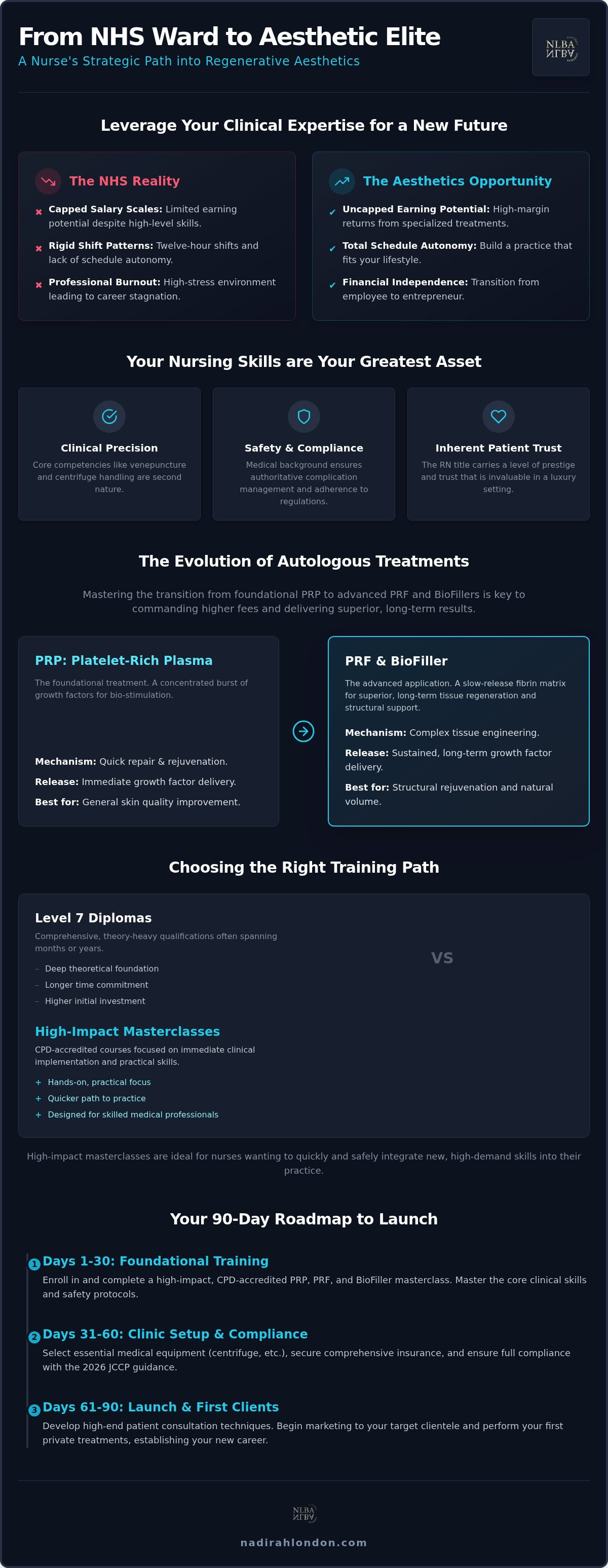
Your medical degree is a passport to a lifestyle that doesn't involve twelve-hour night shifts or capped salary scales. While your clinical expertise is undeniable, the reality of NHS burnout and rigid shift patterns often feels like a dead end for your professional growth. It's time to leverage your surgical-grade precision in a market that rewards it. Choosing the right PRP training course for nurses London is more than just adding a certificate to your portfolio. It's a strategic move into the regenerative aesthetics industry. It's where clinical rigor meets luxury artistry.
We understand that the fear of complications or shifting regulations can feel daunting. You want to ensure your practice is safe, insured, and fully compliant with the latest May 2026 JCCP guidance. This guide promises to bridge the gap between your current medical role and a prestigious London aesthetic career. We'll preview the essential skills needed for Platelet-Rich Plasma mastery, the transition to lucrative BioFiller treatments, and the steps to achieving total financial independence through your own private practice. Clinical precision. Modern luxury. High-impact results. Your transformation starts here.
Table of Contents
The 2026 Landscape of PRP Training for Nurses in London
The 2026 aesthetic market isn't just about freezing muscles or filling lines. It's about regeneration. Platelet-Rich Plasma (PRP) has emerged as the gold standard for patients seeking bio-stimulatory results without synthetic additives. For medical professionals, securing a spot in a premier PRP training course for nurses London is the definitive first step toward clinical autonomy. London remains the undisputed hub for this evolution, attracting high-net-worth clients who demand precision over high-street shortcuts.
To better understand the clinical application of these techniques, watch this helpful video:
The regulatory environment has sharpened. Since the JCCP issued its updated guidance in May 2026, the industry has moved decisively toward a medical-led model. The NMC now plays a more active role in overseeing the standards of registered nurses entering the private sector. This shift isn't a barrier; it's a protective moat for qualified practitioners. Transitioning from a rigid NHS ward to a high-end London clinic is more than a career change. It's a lifestyle upgrade that exchanges capped salary scales for an uncapped entrepreneurial future.
Why Nurses are the Ideal PRP Practitioners
Nurses bring a unique set of skills to the aesthetic table. Clinical precision is a given; venepuncture and centrifuge handling are already core competencies for RGNs. Safety remains the highest priority. Your medical background allows you to identify contraindications and manage complications with authority. Patient trust is your greatest asset. The RN title carries a level of prestige that non-medical injectors simply cannot replicate in a luxury setting.
The ROI of Regenerative Aesthetic Training
The financial shift is significant. Contrast standard NHS hourly rates with the high-margin returns of a single PRP or PRF session. Choosing a high-caliber PRP training course for nurses London allows you to tap into a market where London's elite clientele are pivoting toward "quiet luxury" and bio-stimulators. This creates a massive opening for skilled injectors. You can build a portfolio career by balancing agency shifts with private aesthetic appointments, eventually moving to full-time independence and total schedule autonomy.
Advanced Techniques: Transitioning from PRP to PRF and BioFillers
The aesthetic industry is moving beyond basic hydration. Elite practitioners are now pivoting toward Platelet-Rich Fibrin (PRF) and autologous BioFillers. While traditional PRP offers a concentrated burst of growth factors, PRF provides a slow-release fibrin matrix. This promotes superior tissue regeneration and long-term structural support. PRF represents a shift from simple growth factor delivery to complex tissue engineering. It's the difference between a quick repair and long-term structural rejuvenation. Adhering to the UK Regulatory Framework for PRP ensures your practice remains at the forefront of clinical safety. Mastering these nuances via a high-end PRP training course for nurses London allows you to offer treatments that synthetic products simply cannot replicate.
Regenerative medicine is the new luxury. Patients are increasingly wary of "over-filled" looks. They want their own biology to do the work. Integrating PRF into your service menu isn't just a clinical upgrade; it's a financial one. It allows for higher consultation fees and specialized treatment packages. In the London market, exclusivity is currency. Patients aren't just buying a treatment; they're buying your clinical expertise and the safety of a regulated environment. For those looking to refine their skills in a working clinic environment, exploring an advanced aesthetic training path is the logical next step.
Mastering the BioFiller: The Natural Rejuvenation Trend
Autologous volumisation is the future of facial contouring. The process involves precise thermal manipulation of the patient's own blood. This creates a natural scaffold for tissue support.
Thermal processing: Controlled heating and cooling of plasma to denature proteins.
Clinical application: Deep dermal placement for volume loss. Surface-level smoothing for fine lines.
Ideal candidates: Patients seeking "clean beauty" alternatives. Individuals with previous dermal filler sensitivities.
Market positioning: High-ticket "Bio-Aesthetic" service. Minimal overheads. Exceptional patient satisfaction.
PRP for Hair Restoration and Skin Rejuvenation
Diversifying your clinical portfolio requires mastery over multiple anatomical zones. Regenerative techniques offer a versatile solution for skin and scalp concerns.
Advanced scalp protocols: Intradermal injections for androgenetic alopecia. Post-transplant graft survival support.
Synergistic microneedling: The "Vampire Facial" evolution. Combining mechanical trauma with autologous growth factors for rapid skin remodeling.
Under-eye restoration: Safe treatment of the peri-orbital region. Natural brightening. Improved skin laxity. No risk of edema.
Post-procedure integration: Using PRP to accelerate healing after advanced injectable treatments like Russian Lips.
Choosing the Right Course: Level 7 vs. Accredited Masterclasses
The 2026 educational market for aesthetic medicine is divided between academic depth and practical speed. For many, the Level 7 Diploma remains the gold standard for long-term career prestige. It provides a Masters-level foundation that aligns with the latest JCCP standards. However, the immediate clinical demand often requires a different approach. Choosing a high-impact PRP training course for nurses London that focuses on CPD-accredited masterclasses allows for rapid skill acquisition without the multi-year academic commitment. These intensive courses are designed for practitioners who already possess a strong medical foundation and require specialized technical refinement.
Insurance recognition is your ultimate filter for quality. Before enrolling, you must ensure the curriculum is recognized by leading UK providers like Hamilton Fraser or Cosmetic Insure. Reputable London academies will provide transparent certification that meets these strict underwriting criteria. Avoid cut-price sessions in hotel conference rooms. A legitimate academy operates out of a registered clinical environment, utilizing MHRA-regulated medical devices and centrifuges. Your professional indemnity depends entirely on the caliber of your initial training.
The Importance of Hands-On Clinical Practice
Theory alone won't build a private practice. A superior PRP training course for nurses London prioritizes live model interaction. Practicing on 10 or more live models is essential for developing the tactile sensitivity required for delicate areas like the peri-orbital region. Small group sizes, typically limited to 6 delegates, ensure one-on-one mentorship from expert practitioners. The Nadirah London Beauty Clinic & Academy model excels here. It places you in a functioning, luxury clinic environment where you observe real patient flows and high-end service standards from day one.
Complications Management and Emergency Protocols
Safety is the hallmark of a nurse-led clinic. While PRP is autologous and carries a low rejection risk, the injection process itself requires advanced safety protocols. You must be able to distinguish between standard bruising and the early signs of vascular events.
Emergency Kit Essentials: Hyaluronidase (for combined filler cases), adrenaline, and clinical-grade dressings.
Vascular Occlusion Training: Advanced protocols for identifying and reversing rare injection complications.
Post-Course Mentorship: Access to a professional network for real-time advice during your first solo cases.
Regulatory Compliance: Deep dives into the Blood Safety and Quality Regulations 2005.
The London Clinic Immersion: Developing Your Aesthetic Eye
The environment where you master your craft defines the standard of your future practice. Training in a sterile classroom might teach you the mechanics of a centrifuge, but it fails to cultivate the "aesthetic eye" required for high-end results. A premier PRP training course for nurses London should take place within a working, luxury clinic. This immersion allows you to absorb the nuances of premium patient care, from the initial greeting to the sophisticated clinic layout. You aren't just learning a medical procedure. You're learning how to deliver a transformative experience that justifies London's premium rates.
By choosing a PRP training course for nurses London that prioritizes clinic-first learning, you gain the confidence to handle high-net-worth consultations. Mastering the "Aesthetic Consultation" is your most valuable skill. It is the transition from medical diagnosis to aesthetic enhancement. While your nursing background focuses on pathology, aesthetics focuses on harmony. Facial mapping and symmetry are the artistry behind the needle. You must learn to identify the golden ratios that define the "London Look", a refined, natural result that enhances rather than masks. Developing this artistic intuition separates a technician from a specialist.
Ready to elevate your clinical standards and master the art of the consultation? Explore our advanced aesthetic training courses to begin your immersion.
From Consultation to Aftercare: The Patient Journey
Building a loyal client base requires more than technical skill. It requires professional communication and managed expectations. A successful patient journey involves:
Patient selection: Learning when to say "no" to protect your reputation and patient safety.
Managed expectations: Transparent discussions regarding the gradual, regenerative results of plasma treatments.
Aftercare protocols: Precise post-procedure instructions to maximize growth factor efficacy and minimize downtime.
Client retention: Moving from a single transaction to a long-term, multi-modality rejuvenation plan.
Specialist Focus: Liquid BBL and Body Contouring
The demand for non-surgical body work is accelerating. Large-volume injections represent the next frontier for the ambitious nurse practitioner. Body contouring allows you to move beyond facial aesthetics into high-ticket rejuvenation. Key focus areas include:
Liquid BBL: Mastering the use of specialized volumisers for non-surgical buttock enhancement and contouring.
Safety protocols: Managing the unique risks associated with deep tissue placement in a private clinic setting.
Demand growth: Tapping into the lucrative market for body skin tightening and volume restoration.
Professional expansion: Diversifying your service menu to include high-margin body treatments that non-medical injectors cannot offer.
Launching Your Private Practice with Nadirah London Beauty Clinic & Academy
Completing your PRP training course for nurses London marks the start of a structured 90-day transition into the private sector. Moving from a clinical ward to an aesthetic practice requires a strategic roadmap. Month one focuses on regulatory compliance, insurance activation, and refining your clinical protocols. Month two involves securing your high-end clinical space and procuring premium equipment. By month three, your focus shifts to patient acquisition and the delivery of high-impact results. This isn't just about performing a procedure. It's about building a sustainable, high-margin business in the heart of the capital.
The technical foundation of your clinic relies on precision-grade equipment. Choosing a centrifuge is a clinical decision, not a budget one. You need MHRA-registered devices that ensure consistent platelet concentrations and patient safety. Your medical consumables, from vacutainers to high-grade needles, must reflect the luxury standards of your practice. Marketing your skills requires a focus on social proof and clinical authority. High-end London clients value results and safety over discounts. Showcase your clinical precision and the regenerative science behind your work to build trust before the first consultation even begins.
Pricing and Profitability for Nurse-Led Clinics
Profitability in regenerative aesthetics is driven by low product overheads and high perceived value. Unlike synthetic fillers, the primary "product" is the patient's own biology. This allows for exceptional margins.
Service Pricing: Benchmarking against London clinic averages for PRP and BioFiller sessions to ensure competitive luxury positioning.
Fixed Overheads: Managing room rental fees, professional indemnity insurance, and clinical waste disposal.
Variable Costs: Precise budgeting for consumable kits and centrifuge maintenance.
Revenue Growth: Integrating complementary services like IV Vitamin Drips or advanced skin specialist treatments to increase average patient spend.
The Future of Your Career: Continuous Professional Development
Excellence is a continuous pursuit. Your initial training provides the foundation, but the London market rewards the multi-skilled specialist. Expanding your portfolio allows you to offer comprehensive facial and body rejuvenation packages that address complex patient needs. The Nadirah London Beauty Clinic & Academy community offers ongoing mentorship and access to advanced modules to ensure your clinical standards remain elite. Mastery of advanced injectables, such as Russian Lips or Liquid BBL, ensures you stay ahead of industry trends and patient demands.
View Upcoming PRP Training Dates at Nadirah London Beauty Clinic & Academy to secure your place in our next intake and begin your transition to aesthetic excellence.
Your Future in Regenerative Aesthetics Starts Now
The transition from a clinical NHS ward to a high-end private practice is a journey of both skill and mindset. By mastering the science of autologous regeneration, you're positioning yourself at the forefront of the 2026 aesthetic market. You've seen how the right PRP training course for nurses London provides more than just a certificate. It offers a total immersion into the artistry of facial mapping, the precision of PRF, and the lucrative potential of BioFillers.
Success in this elite sector requires a clinic-first approach. At Nadirah London Beauty Clinic & Academy, you'll learn within a real-world, luxury clinic setting, ensuring you're accredited by the UK’s leading aesthetic insurance providers from day one. Our exclusive focus on advanced techniques like Russian Lips and regenerative volumisation ensures your service menu remains unparalleled. It's time to exchange rigid shift patterns for professional autonomy and clinical excellence.
Download our 2026 Academy Prospectus and Secure Your Place
The path to your own private practice is clear, and the demand for medical expertise has never been higher. We look forward to welcoming you into our professional community.
Frequently Asked Questions
Is a PRP training course for nurses legally required to practice in London in 2026?
Yes, professional competency is a prerequisite for both insurance coverage and clinical safety. The 2026 regulatory landscape, influenced by the latest JCCP guidance, requires nurses to provide proof of accredited training to practice in regulated environments. Adhering to the Blood Safety and Quality Regulations 2005 is essential. Without a formal certificate, you won't be able to secure the professional indemnity insurance necessary to treat patients in a private London clinic.
How much can a nurse earn per PRP session in a private London clinic?
Revenue per session typically ranges between £300 and £800 depending on the treatment area and complexity. Because you're utilizing the patient's own blood, the overhead costs are significantly lower than synthetic fillers. This allows for high-margin returns on every appointment. Many practitioners find that performing just three to four sessions a week can effectively match a standard weekly NHS salary, providing a clear path to financial independence.
Do I need a prescriber for PRP and BioFiller treatments as a nurse?
No, you generally don't need a prescriber for autologous treatments. Since PRP and BioFillers are derived from the patient's own biology rather than being classified as Prescription Only Medicines (POMs), they fall outside the requirement for a medical prescriber. This clinical autonomy is a major advantage for nurse practitioners. It allows you to manage your patient list and treatment plans without the added cost or logistical delay of a third-party prescriber.
How many live models will I inject during the Nadirah London PRP masterclass?
You'll gain practical experience by injecting at least 10 live models during your training. This high volume of hands-on practice is a core pillar of our "Clinic-First" philosophy. We believe that tactile sensitivity can't be learned from a textbook. You'll work under direct mentorship in our luxury clinic setting, ensuring you've mastered the precision required for delicate peri-orbital and scalp treatments before you treat your first private client.
What is the difference between PRP and PRF training for nurses?
PRP training focuses on concentrated growth factors with rapid release, while PRF training introduces the science of slow-release fibrin matrices. A high-caliber PRP training course for nurses London will often cover both to ensure you're current with regenerative trends. PRF is considered the next evolution in the industry, offering superior tissue support and longer-lasting rejuvenation. Mastering both allows you to tailor your clinical approach to the specific regenerative needs of your patients.
Are Nadirah London Academy courses CPD accredited and insurance-approved?
Yes, all our training modules are fully CPD accredited and recognized by the UK's premier aesthetic insurance providers. We ensure our curriculum meets the strict underwriting criteria of companies like Hamilton Fraser and Cosmetic Insure. Upon completion, you'll receive the formal certification required to activate your professional indemnity insurance. This allows you to launch your private practice with total confidence in your clinical and legal standing.
Can I perform Liquid BBL after completing an advanced PRP course?
Liquid BBL is an advanced body contouring procedure that requires its own specialized training module. While a PRP training course for nurses London provides an excellent foundation in regenerative science, large-volume body injections involve different safety protocols and anatomical considerations. We recommend completing our dedicated Liquid BBL course after you've gained confidence in facial aesthetics. This ensures you can manage the unique risks associated with non-surgical body work with professional authority.
How long does it take to transition from the NHS to a full-time aesthetics career?
Most nurses successfully transition within a 90-day to six-month timeframe. The first 90 days are usually spent on training, insurance setup, and securing a clinical space. Many practitioners begin by balancing their NHS or agency shifts with private weekend appointments. As your patient list grows and your social proof increases, you can gradually reduce your clinical hours until you're ready for full-time aesthetic entrepreneurship.


Comments