

Advanced Facial Courses London: The 2026 Guide to Accredited Skin Specialisation

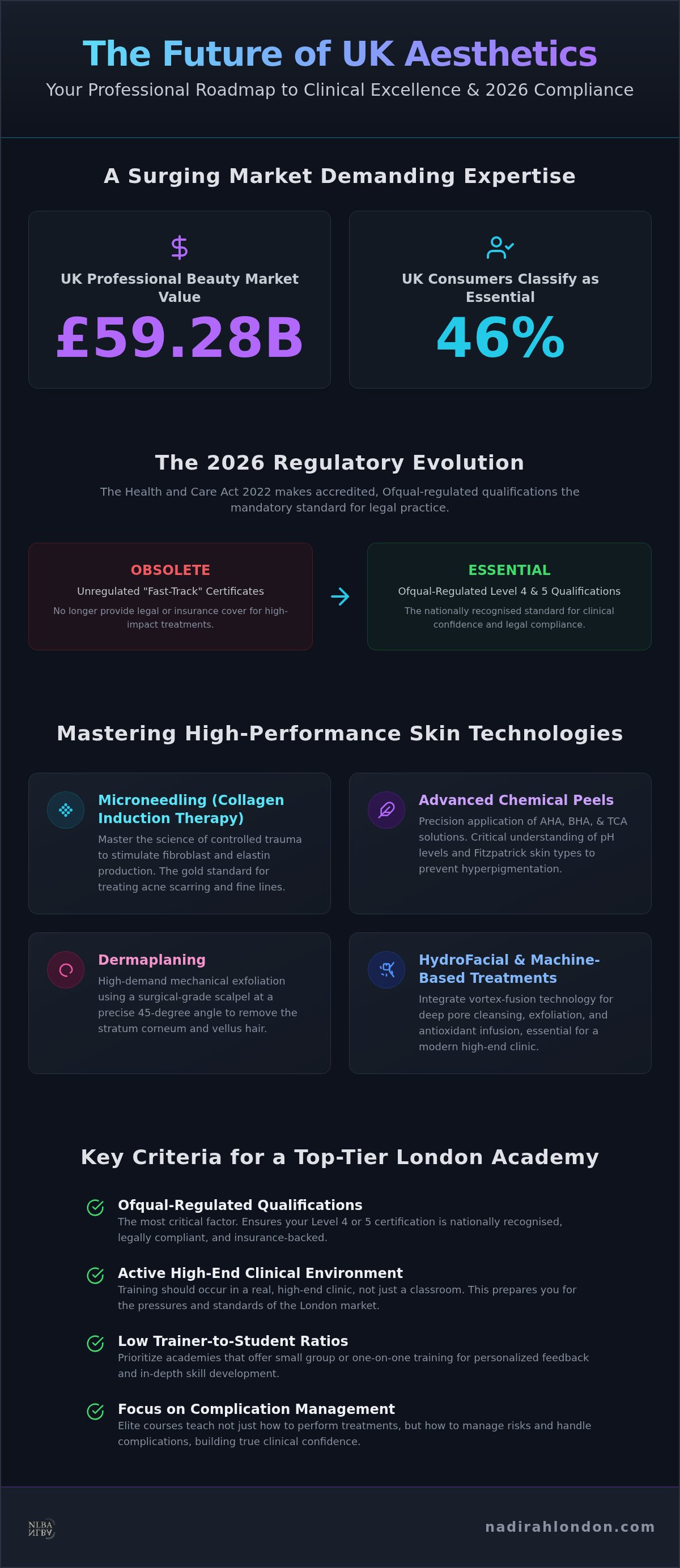
Did you know that 46% of UK consumers now classify professional beauty services as an essential expense? The demand for clinical excellence is surging, yet many practitioners remain trapped by regulatory confusion and outdated certifications. Securing your place in this £59.28 billion market requires more than basic skills. It demands the clinical precision found in the advanced facial courses London academies provide to meet 2026 standards.
It's natural to feel overwhelmed by the Health and Care Act 2022 and the mandatory local authority licensing now required for high-impact treatments. You want to offer microneedling and chemical peels with absolute confidence, avoiding complications and legal pitfalls. This guide provides a professional roadmap to Level 4 and Level 5 accreditation. We'll explore the shift toward skin longevity. Ofqual-regulated qualifications. Elite practitioner pricing. Expect a clear, results-driven breakdown of the training pathways that turn aesthetic ambition into clinical expertise.
Table of Contents
Why Choose an Accredited Advanced Facial Course in London?
The London beauty market has undergone a fundamental shift. Clients no longer seek simple relaxation; they demand clinical skin interventions that deliver measurable, cellular-level change. Choosing the right advanced facial courses london offers is about more than learning a new technique. It's about professional survival. In a city where high-end lifestyle standards meet clinical precision, your training must bridge the gap between the study and application of beauty treatment and advanced dermatological science.
To better understand the foundational structure of professional skin care training, watch this helpful video:
The 2026 regulatory landscape is now a primary consideration for every aesthetician. With the Health and Care Act 2022 fully active, the transition toward mandatory local authority licensing for London practitioners is complete. Unregulated "fast-track" certificates no longer provide the legal cover required to operate. Specialized skin knowledge is the key to premium pricing. If you want to charge London rates, you must demonstrate London-level expertise through recognised awarding bodies.
The Importance of CPD Accreditation for Aestheticians
Professional reputation: Establishing yourself as a lifelong learner in a rapidly evolving field.
Industry credibility: Aligning your practice with the standards of the Joint Council for Cosmetic Practitioners (JCCP).
Client trust: Providing peace of mind through insurance-backed qualifications.
CPD accreditation in the UK beauty and aesthetics industry is a structured approach to lifelong learning that ensures practitioners maintain and enhance their technical skills and safety standards through verified educational hours.
Safety and Standards in the 2026 Aesthetics Market
The 2026 market demands a "safety-first" approach to invasive skin treatments. Beginners must prioritize anatomical safety over the lure of fast-track certificates that skip essential biological foundations. Modern advanced facial courses london academies focus on risk mitigation and complication management. When selecting an academy, look for these markers of authority:
Ofqual-regulated qualifications: Ensuring your Level 4 or 5 diploma is nationally recognised.
Clinical environments: Training in spaces that mirror the high-end clinics where you'll eventually work.
Expert mentorship: Learning from active practitioners who understand current UK market conditions and insurance requirements.
Securing your future means investing in education that withstands scrutiny. Whether you're transitioning from basic beauty therapy or entering the field as a specialist, your accreditation is your most valuable asset.
Core Modules: Mastering High-Performance Skin Technologies
Advanced skin health requires a mastery of both biological science and mechanical precision. The curriculum for elite advanced facial courses london academies focuses on four high-impact pillars that define the modern aesthetic industry:
Microneedling (Collagen Induction Therapy): This module covers the science of controlled trauma. You'll master the technique of using micro-needles to stimulate fibroblasts and elastin production. It's the gold standard for treating acne scarring and fine lines.
Advanced Chemical Peels: Go beyond superficial exfoliation. Training involves the precision application of AHA, BHA, and TCA solutions. Success depends on understanding pH levels and the specific vulnerabilities of different Fitzpatrick skin types to prevent post-inflammatory hyperpigmentation.
Dermaplaning: A high-demand mechanical exfoliation technique. You'll learn to use a surgical-grade scalpel at a precise 45-degree angle to remove the stratum corneum and vellus hair.
HydroFacial & Machine-Based Treatments: Integrating vortex-fusion technology for deep pore cleansing and antioxidant infusion. These treatments are essential for clinics targeting the luxury market.
Refining your skills in these areas allows you to deliver the 'glass skin' results your London clientele expects. For those seeking to elevate their practice, exploring a professional skin specialist course provides the necessary clinical foundation for these high-performance interventions.
Mastering Facial Anatomy and Skin Physiology
Clinical safety starts with a deep understanding of the five layers of the epidermis. You can't perform microneedling or deep peels effectively without knowing exactly where the basement membrane sits. Mapping facial nerves and vascular structures is essential to prevent adverse reactions during more invasive procedures. The British Association of Beauty Therapy & Cosmetology (BABTAC) emphasizes that anatomical knowledge is the primary barrier against treatment complications. Your training must cover the science of wound healing. This ensures you can trigger regeneration without causing permanent scarring or hyperpigmentation. Understanding the inflammatory phase of healing allows you to explain the recovery process to clients with clinical authority.
Consultation and Skin Analysis Skills
A professional skin analysis is the starting point for every advanced procedure. You aren't just selling a service; you're solving a biological concern. Mastering the use of skin diagnostic tools and Wood's lamps allows for a deeper look at underlying damage. Managing client expectations is a vital skill. High-performance treatments often require a series of sessions rather than a single visit. Developing bespoke long-term treatment plans ensures client retention and superior aesthetic outcomes. You'll learn to identify contraindications like active rosacea or keloid scarring early. This protects both your professional reputation and your client's skin health. Precise consultation leads to higher conversion rates for premium treatment packages.
Entry Requirements: Navigating the Pathway to Skin Specialisation
Entering the elite tier of advanced facial courses london offers requires a strategic educational foundation. High-end clinics and discerning clients demand more than just technical skill; they require a deep understanding of dermatological science. The standard professional route begins with NVQ Level 2 and Level 3 qualifications. These serve as the essential pillars for advanced interventions like chemical peels and microneedling. Without this groundwork, practitioners lack the anatomical knowledge required to manage complications or achieve clinical-grade results.
Level 2 Beauty Therapy: Basic skincare, facial massage, and hygiene protocols.
Level 3 Beauty Therapy: Advanced electricals, deep anatomy, and physiology.
Skin Specialist Course: A targeted bridge for those focusing exclusively on clinical skin health.
A common misconception in the UK is that advanced treatments are reserved solely for medical professionals. This is inaccurate. The non-medic pathway is a well-established route for dedicated beauty therapists to transition into clinical aesthetics. However, the 2026 regulatory environment means that fast-track certificates without regulated foundations are becoming obsolete. Major insurers now demand proof of a structured learning journey before providing cover for invasive skin procedures.
Pathways for Experienced Beauty Therapists
For those already holding a Level 3 qualification, the transition to advanced skin specialisation is streamlined. Your existing knowledge of skin types and contraindications allows for a more intensive focus on high-performance technologies. Bridging the gap involves moving from relaxation-focused treatments to results-driven clinical protocols. Most insurers require a minimum of an NVQ Level 3 in Beauty Therapy or an equivalent anatomy and physiology qualification before allowing a non-medic to progress to Level 4 skin training.
Clinical focus: Transitioning from spa environments to medical-grade settings.
Technical mastery: Refining needle depth and acid concentration skills.
Professional evolution: Moving from therapist to skin specialist.
Fast-Track Systems for Career Changers
Career changers often look for accelerated routes into the industry. While intensity is attractive, the curriculum must remain robust. A foundation module in anatomy and physiology is non-negotiable for anyone entering without prior beauty experience. Evaluating these programmes requires a critical look at the hours of supervised clinical practice provided. A certificate is only as valuable as the insurance it secures. Ensure any fast-track programme you select is recognised by leading UK bodies to guarantee your right to practice in the 2026 market. Prioritizing foundation knowledge ensures you don't just perform a treatment, but understand the biological why behind every procedure.
Key Criteria for Selecting a Top-Tier London Academy
Selecting the right institution is a high-stakes decision. In the competitive London market, your choice of academy determines your technical precision and your ability to charge premium prices. Discerning clients expect clinical excellence. Look for these non-negotiable standards when evaluating advanced facial courses london.
Low trainer-to-student ratios: Small groups are essential. You need direct, over-the-shoulder supervision when mastering delicate needle depths or acid applications.
Clinical facility standards: Training should occur in a sterile, high-end environment. Avoid academies that operate out of generic classrooms or hotel conference rooms.
Post-course mentorship: Ongoing clinical oversight is vital. Choose a provider that offers a direct line to tutors for complication management advice.
Professional supply access: Reliable pathways to purchase CE-marked products and medical-grade devices.
Business development: Strategic guidance on London-specific pricing and high-end marketing.
Post-course support is often the missing link in entry-level training. You need an academy that provides more than just a certificate. Access to professional-grade supplies and ongoing clinical advice ensures you handle complications safely and maintain high standards. Learning how to market these services is equally important. If you don't understand the ROI of your equipment, your business won't scale. Ready to elevate your career? Join our aesthetic training courses to learn in a clinical environment from industry experts.
Evaluating Academy Reputation and Student Success
Look beyond the polished website. Review student portfolios and real-world results. Don't just look at immediate post-treatment photos; seek out healed results. Verify that your lead tutors are active practitioners. An academy that operates as an active, high-end beauty clinic provides insights that a generic classroom cannot. You'll learn the nuances of client care in a luxury setting. Check for testimonials that mention career progression and insurance approval. A reputable academy will have clear links to insurers who recognize their certificates.
The Role of Hands-On Practice with Live Models
Mannequin heads don't have blood flow, pores, or varying textures. Advanced skin training requires supervised practice on live models with diverse skin types. Mastering the depth of a microneedle or the reaction of a chemical peel on different Fitzpatrick scales is impossible without real-world application. This builds the confidence to handle clinical scenarios independently. You need to see how skin responds in real-time. Supervised practice on diverse models ensures you can identify subtle signs of over-treatment before they become complications. It’s the only way to bridge the gap between theory and high-level clinical practice.
Elevate Your Career at Nadirah London Beauty Clinic & Academy
Nadirah London represents the pinnacle of aesthetic education. We don't just provide a certificate; we deliver a blueprint for professional transformation. Our academy bridges the gap between clinical precision and the luxury lifestyle branding necessary to thrive in the capital. Choosing the right advanced facial courses london offers is a strategic investment in your future. We focus on high-impact results that command premium prices in the UK's most competitive market.
Accredited curriculum: Industry-recognised pathways from Dermaplaning to comprehensive Skin Specialist modules.
Clinical precision: Mastery of advanced technologies within a regulated, professional framework.
Luxury aesthetics: Learning the nuances of high-end client care and aspirational brand positioning.
Active clinic insights: Real-world training delivered by practitioners currently operating in the Greater London sector.
Our mentorship extends beyond the classroom. We provide the business intelligence required to build a high-revenue practice. This includes strategic guidance on treatment layering, client retention, and the procurement of professional-grade supplies. You'll graduate with the technical confidence to handle complex skin concerns and the business acumen to scale your private clinic effectively.
Our Professional Training Environment
Training occurs within our active, high-end Greater London clinic. This setting provides a real-world perspective that generic classrooms cannot replicate. You'll gain hands-on experience with advanced technologies including HydroFacial systems and professional-grade skin boosters. Graduating from a recognised London centre of excellence adds immediate prestige to your professional profile. It signals to your clients that you've been trained to the highest clinical standards. We maintain small student groups to ensure you receive dedicated, over-the-shoulder guidance during every practical module. This environment fosters the clinical confidence required to perform invasive treatments safely and effectively.
Next Steps: Enrolling in Your Advanced Course
Securing your place in our upcoming intakes is the first step toward aesthetic specialisation. We offer flexible learning pathways that allow you to combine modules for maximum return on investment. Many students choose to pair our Skin specialist course with aesthetic training modules to provide a comprehensive service menu. This dual approach ensures you can address both cellular skin health and structural rejuvenation. Our application process is streamlined for professional efficiency. We recommend early enrolment for our high-demand 2026 modules to ensure your preferred dates. Enrol in an accredited advanced facial course at Nadirah London today and begin your journey toward clinical mastery.
Secure Your Future in London's Elite Aesthetic Market
The 2026 aesthetics landscape requires a fusion of clinical mastery and high-end brand positioning. You've seen how mandatory licensing and Ofqual-regulated pathways have redefined the industry. Success now depends on your ability to deliver transformative results through microneedling, chemical peels, and advanced machine-based therapies. By prioritizing advanced facial courses london academies that offer clinical oversight, you ensure your practice meets the highest safety standards while commanding premium service rates.
Nadirah London provides the bridge between traditional beauty and medical-grade aesthetics. Our programmes are accredited by leading UK professional bodies. We offer hands-on training with live models in a luxury environment. You'll learn from expert tutors with active clinical practices who understand the nuances of the Greater London market. This combination of technical precision and business intelligence is what sets our graduates apart in a crowded marketplace.
Explore Accredited Aesthetic and Skin Training at Nadirah London
Your journey toward becoming a recognised skin specialist starts with the right foundation. Take the lead in this evolving industry and transform your professional identity today.
Frequently Asked Questions
Are advanced facial courses for beginners worth it in 2026?
Yes, investing in accredited training is essential as the UK beauty market is projected to reach £59.28 billion by 2026. Beginners who choose advanced facial courses london academies early will be better prepared for the mandatory licensing schemes set by local authorities. Starting with a regulated Level 4 pathway ensures you can meet the rising consumer demand for clinical-grade skin results from day one.
Can a non-medic do an accredited advanced facial course in London?
Non-medics can absolutely pursue advanced skin specialisation in the capital. The UK regulatory framework allows beauty therapists and career changers to perform treatments like microneedling and chemical peels. You don't need a medical degree, but you do need a solid foundation in anatomy and physiology. Most accredited academies require an NVQ Level 3 or an equivalent bridge course to ensure clinical safety.
How long does it take to become a qualified skin specialist?
The timeline typically ranges from three months to one year depending on your prior experience. Experienced therapists with a Level 3 qualification can often complete intensive advanced modules in a few weeks. Beginners should expect a longer journey to master the complex anatomy and practical clinical hours required for Ofqual-regulated Level 4 or 5 certifications.
What qualifications do I need to start an advanced skin course?
You generally need an NVQ Level 3 in Beauty Therapy or a recognised Level 3 certificate in Anatomy and Physiology. If you're a complete beginner, you'll need to complete these foundational modules first. Many top-tier London academies offer a skin specialist course that acts as a direct entry point, combining basic skin science with advanced technical training.
Will I be able to get insurance after a short facial course?
Insurance approval depends entirely on the course's accreditation and your educational background. You won't get cover for invasive treatments like deep peels or microneedling after a generic, unaccredited workshop. You must ensure your certificate is recognised by major UK insurers like Hamilton Fraser or Cathedral. These providers require proof of regulated training and supervised hands-on practice.
How much can a skin specialist earn in London?
Experienced specialists in prestigious London clinics often command between £150 and £450 per treatment session. With consumer spending in the beauty sector expected to rise by 3.9% in 2026, the financial upside for qualified practitioners is significant. Your earning potential scales with your accreditation level and your ability to deliver high-impact, clinical results that justify premium London pricing.
What is the difference between a basic facial and an advanced facial course?
Basic facials focus on relaxation and superficial skin maintenance, while advanced courses teach clinical interventions. Advanced training involves using active chemical agents, needles, and medical-grade technology to trigger cellular regeneration. While a basic facial stays within the stratum corneum, advanced treatments target deeper epidermal layers to resolve concerns like scarring, pigmentation, and skin longevity.
Are online advanced facial courses recognised for accreditation?
Online theory modules are widely recognised, but practical assessments must be performed in person. A hybrid approach is standard for 2026 accreditation. You'll complete your anatomy and physiology study via digital platforms, but you must attend a clinical academy for supervised practice on live models. Purely online courses without a practical component rarely meet the stringent requirements for UK professional insurance.


Comments