

Starting an Aesthetics Business from Home UK: The 2026 Definitive Guide

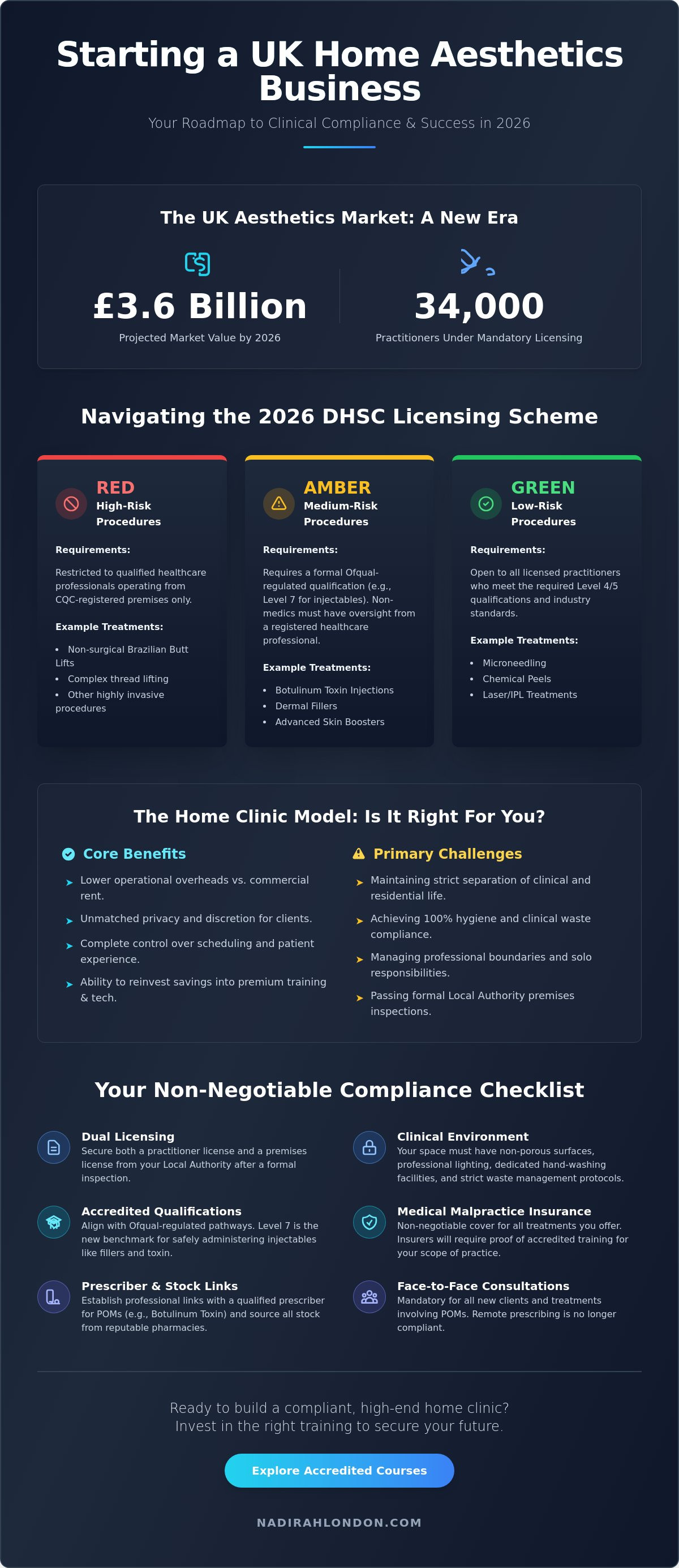
The UK aesthetics market is projected to surpass £3.6 billion in 2026, yet the path to entry has never been more scrutinized. With 34,000 practitioners now operating within the mandatory licensing scheme, the transition to starting an aesthetics business from home UK requires more than just technical skill; it demands total clinical compliance. You're likely aware that the era of minimal oversight has ended, replaced by a "traffic light" regulatory system and strict Ofqual-regulated qualification requirements. The challenge isn't just about performing treatments, it's about establishing a professional, high-end environment that satisfies local authority standards and ensures patient safety.
You recognize that a successful home clinic must mirror the sophistication of a premium high-street destination. This definitive guide provides a structured roadmap to launching your business with confidence and clinical precision. We'll detail the essential steps for securing insurance, meeting Level 7 standards for injectables, and implementing the required face-to-face consultation protocols. From clinical setup to mastering high-value offerings like Dermal Fillers and Anti-Wrinkle Injections, you'll gain the blueprint for a compliant, aspirational practice that thrives in the new regulatory landscape.
Key Takeaways
Decipher the 2026 DHSC licensing scheme and the "traffic light" regulatory system to ensure your practice remains fully compliant.
Master the transition from a residential setting to a high-end clinical environment when starting an aesthetics business from home UK.
Identify the non-negotiable hygiene essentials and luxury design elements required to replicate professional clinic standards in a home suite.
Navigate the operational complexities of securing medical malpractice insurance and establishing professional prescriber links for injectable stock.
Align your career trajectory with accredited training pathways, from skin specialist foundations to advanced procedures like Liquid BBL and BioFiller.
Table of Contents
The Reality of Starting an Aesthetics Business from Home in the UK
The landscape of Aesthetic medicine has undergone a radical transformation. In 2026, the home-based model is no longer a casual side venture; it's a specialized clinical environment. Successfully starting an aesthetics business from home UK requires a shift in perspective. You aren't just creating a treatment room; you're engineering a professional sanctuary that meets the same rigorous standards as a Harley Street suite. This model prioritizes clinical precision within a residential footprint, ensuring every client journey is both safe and sophisticated.
The "kitchen table" era is officially over. With the full implementation of the 2026 licensing scheme, practitioners must demonstrate total environmental control. This means dedicated clinical spaces with non-porous surfaces, professional-grade lighting, and strict waste management protocols. The shift towards regulation has elevated the industry, filtering out substandard setups and rewarding those who invest in high-end, compliant infrastructure. For the modern practitioner, the home clinic offers a unique competitive edge through reduced overheads and enhanced client discretion.
Core Benefits of the Home Model:
Lower operational overheads compared to high-street commercial leases.
Unmatched client privacy for high-profile or discreet individuals.
Complete control over scheduling and the patient experience.
Ability to reinvest savings into premium training and advanced technology.
Primary Operational Challenges:
Maintaining strict separation between residential life and clinical practice.
Achieving 100% hygiene compliance in a domestic building.
Managing professional boundaries and solo practitioner responsibilities.
Is a Home Clinic Right for You?
Success starts with a rigorous self-assessment. You must be prepared for the dual role of lead clinician and business director. Evaluate your space with a critical eye. Does it allow for a separate entrance? Is there a dedicated sink with sensor-operated taps? The transition from practitioner to business owner requires a focus on logistical excellence. You're responsible for everything from stock procurement of Anti-Wrinkle Injections to ensuring your clinical waste contracts are valid and up to date.
Market Trends for 2026
The demand for "Hyper-Local" luxury is surging. Clients increasingly seek high-end results without the commute to urban centers. We're seeing a significant rise in residential demand for regenerative treatments like PRP, PRF, and BioFiller. Modern patients value the boutique feel of a specialized home suite over the sterile, often crowded atmosphere of large commercial clinics. An Aspirational Home Clinic is defined as a seamless fusion of uncompromising clinical safety and bespoke boutique comfort.
Navigating UK Legislation and the 2026 Licensing Scheme
The regulatory framework for non-surgical cosmetic procedures has reached a critical turning point. Under the Health and Care Act 2022, the Department of Health and Social Care (DHSC) has implemented a mandatory licensing scheme that officially dictates how practitioners operate. Navigating the legalities of starting an aesthetics business from home UK involves understanding a rigorous "traffic light" system. This system categorizes treatments by risk, directly impacting your scope of practice and premises requirements. Compliance isn't optional; it's the foundation of a professional clinical identity.
The 2026 "Traffic Light" Regulatory System:
Red (High-Risk): Restricted to qualified healthcare professionals in CQC-registered premises. Includes non-surgical Brazilian Butt Lifts.
Amber (Medium-Risk): Includes Botulinum Toxin and Dermal Fillers. Non-healthcare practitioners require oversight from a registered healthcare professional.
Green (Low-Risk): Procedures open to all licensed practitioners meeting the required industry standards and regulations.
Local Authority licensing is now the primary gateway for home-based clinics. You must secure both a practitioner license and a premises license. This process involves a formal inspection of your home suite to ensure it meets strict hygiene and safety criteria. Being listed on an accredited register, such as the JCCP or Save Face, is a significant marker of credibility. These bodies provide the oversight that local councils look for when granting "Special Treatment" licenses. Since June 1, 2025, nurse and midwife prescribers must conduct face-to-face consultations before prescribing medicines like Botox, making remote prescribing a relic of the past.
Essential Qualifications and Training
The era of short, unregulated weekend courses has ended. Ofqual-regulated qualifications, specifically at Level 7 for injectables, are the benchmark for 2026 compliance. Insurance providers and local authorities now demand evidence of regulated training, such as VTCT pathways. Choosing an academy that provides post-course mentorship is vital for solo practitioners. Our Aesthetic Training Courses focus on these high-standard, accredited pathways to ensure your home startup is built on clinical excellence.
Legal Structure and Planning Permission
Deciding between a Sole Trader or Limited Company structure affects your tax efficiency and personal liability. Most home-based startups begin as Sole Traders for simplicity, though Limited Companies offer better protection as you scale. You must contact your local council regarding "Change of Use" planning permission. Operating a clinical business from a residential property often requires a move from Class C3 (Dwellinghouse) to a business-related classification. Always review your mortgage or tenancy agreements; many contain clauses prohibiting commercial activities that could void your contract.
Designing a Clinical Space: From Spare Room to Luxury Suite
The physical environment of your home clinic is the most immediate indicator of your professional standard. When starting an aesthetics business from home UK, your space must transcend the domestic setting to mirror the clinical precision of a high-end London studio. This "Clinical-Luxury" aesthetic isn't just about appearances; it's a functional requirement for 2026 compliance. Clients seeking advanced treatments like Liquid BBL or BioFiller expect an environment that feels both exclusive and uncompromisingly sterile. You're creating a sanctuary where medical expertise meets boutique comfort.
Compliance begins with your surfaces. Carpeting and porous materials are prohibited in treatment areas. You must install high-grade vinyl or tiled flooring and ensure all walls are finished with wipeable, clinical-standard paint. These requirements align with the UK Health and Safety at Work etc. Act 1974, which mandates a safe environment for both practitioners and clients. Proper ventilation is equally critical, especially when performing Advanced Facials or IV Vitamin Drips, to ensure constant air exchange and a fresh, professional atmosphere.
The Clinical Setup Checklist
Efficiency in a small space requires strategic equipment choices. Your setup should include:
Hydraulic Couch: Fully adjustable for ergonomic precision during complex injectable procedures.
Medical-Grade Refrigeration: Essential for the secure storage of Anti-Wrinkle Injections and BioFiller components.
Magnifying LED Lamp: High-intensity task lighting for anatomical accuracy and skin analysis.
Dedicated Clinical Sink: Must feature sensor-operated taps and be separate from any domestic hand-washing facilities.
Clinical Waste Management: A formal contract for sharps disposal and yellow-bag waste collection is a licensing prerequisite.
Creating an Aspirational Experience
To replicate a premium brand identity, focus on sensory branding that masks the residential feel. Neutral palettes, such as soft greys, champagne tones, and crisp whites, project a sense of clinical authority. Use cool-toned LED task lighting to highlight clinical cleanliness during procedures while layering warm, recessed ambient lighting to maintain a sophisticated, spa-like mood. Scent also plays a vital role; avoid domestic fragrances in favor of subtle, clean, or ozonic scents that reinforce the medical nature of the space. Finally, consider the client flow. If a separate entrance isn't possible, ensure the pathway to your suite is clear of domestic clutter, maintaining a professional boundary from the moment they step through your door.
Operational Essentials: Insurance, Stock, and Prescribers
Professionalism extends beyond the clinical suite. Building a robust operational framework is critical when starting an aesthetics business from home UK. This involves securing specialized coverage and establishing a reliable supply chain. It's about mitigating risk while maintaining a premium service standard. Your operational setup should reflect the same clinical precision as your treatment techniques, ensuring every aspect of the business is legally and ethically sound.
Medical Malpractice Insurance is the core of your protection. In 2026, policies must specifically cover home-based clinical environments and the specific range of treatments you offer. Look for policies that include retroactive cover and high indemnity limits. Public liability is equally vital; it protects your residential property and personal assets from business-related claims. In the current regulatory climate, insurers often require evidence of Ofqual-regulated training before granting comprehensive coverage for advanced procedures.
Stock procurement requires absolute integrity. Use only reputable UK pharmacies. The "grey market" for Dermal Fillers and Anti-Wrinkle Injections is a significant danger to patient safety. Counterfeit or diverted products can lead to catastrophic clinical complications and will void your insurance. Reputable pharmacies verify your prescriber's credentials and your qualifications before shipping any medical-grade products. This creates a transparent paper trail essential for local authority licensing inspections.
Emergency readiness is non-negotiable. Every home clinic must stock a full anaphylaxis kit and hyaluronidase. These are essential for managing rare but serious adverse events like vascular occlusions or severe allergic reactions. Safety is the ultimate luxury in a residential setting. Having these protocols in place builds immense trust with your high-value clientele.
The Prescriber Relationship
Non-prescribing practitioners must partner with a registered prescriber, such as a GMC-registered doctor or an NMC-registered nurse prescriber. Since the June 1, 2025, regulation change, all Prescription-Only Medicines (POMs) require a face-to-face physical consultation. The prescriber must see the patient in person before the medicine is ordered. Remote prescribing is no longer permitted. Establish a digital log to track batch numbers, expiry dates, and patient records for total traceability and professional accountability.
Risk Management and Complications
Operating solo means you need a dedicated support network. Joining a complications group like the ACE Group provides immediate access to expert guidance during adverse events. Your informed consent process must be exhaustive. Detail every potential risk for procedures such as IV Vitamin Drips, PRP/PRF, or BioFiller. Insurance providers require proof of these robust protocols to ensure you're managing patient expectations and safety effectively.
Master these clinical protocols and secure your professional future by enrolling in our Aesthetic Training Courses.
Scaling Success with Nadirah London Academy
Starting an aesthetics business from home UK is a strategic venture that requires a foundation of elite education. Your choice of training academy doesn't just provide a certificate; it sets the trajectory for your entire career. At Nadirah London Academy, we focus on high-impact technical skill and clinical safety. This ensures your home-based clinic operates with the same authority as a high-street destination. The path from a residential suite to a market-leading practice begins with uncompromising training standards.
Nadirah London Academy: Specialized Educational Pathways
Skin specialist course: Foundational dermal science and anatomical analysis.
Iv Drip training course: Technical application and safety for IV Vitamin Drips.
Advanced Facials: Clinical rejuvenation and surface refinement techniques.
Anti-Wrinkle Injections: Precision neurotoxin application for age reversal.
Dermal Fillers: Volumetric enhancement and facial contouring.
Advanced Procedures: Mastery of Liquid BBL, BioFiller, and PRP/PRF integration.
Learning in a high-end clinical environment is transformative. It allows you to visualize the "Clinical-Luxury" standard required to compete in the 2026 market. Our academy provides the technical "what" through intensive, expert-led sessions. We also offer the ongoing support necessary to navigate the complexities of solo practice. You'll gain the confidence to deliver high-value results while maintaining total regulatory compliance.
Choosing Your First Course
Strategic selection is vital for maximizing ROI. While many practitioners aim for complex injectables immediately, starting with high-turnover services can stabilize your cash flow. IV Vitamin Drips and Advanced Facials are excellent entry points for home clinics. They require minimal invasive equipment while delivering visible, sophisticated results. As your confidence grows, you'll scale into our Advanced Aesthetic Training Courses. This phased approach allows for a smooth transition from a residential suite to a commercial high-street clinic when you're ready to expand your footprint.
The Nadirah London Advantage
Our training environment reflects the prestige of the London aesthetics sector. We provide accredited certifications that meet the rigorous 2026 UK insurance requirements. This ensures your home startup remains fully compliant and insurable from day one. You'll learn from experts who understand the nuances of the new DHSC licensing tiers and the importance of patient safety. Precision, skill, and clinical excellence are our signatures. Register for our next accredited aesthetics course here to secure your place in the future of British aesthetics.
Master Your Clinical Future in 2026
The evolution of the UK aesthetics market demands a shift from casual practice to clinical excellence. Successfully starting an aesthetics business from home UK in 2026 hinges on your ability to navigate the new DHSC licensing tiers while maintaining a high-end, professional environment. You've learned that total compliance is the only pathway to longevity, from securing a robust prescriber relationship to engineering a sterile, luxury clinical suite. By prioritizing Ofqual-regulated qualifications and strict hygiene protocols, you position yourself as a trusted expert in an increasingly competitive landscape.
Nadirah London Academy is your partner in this professional transformation. As an Accredited Training Academy led by London's top practitioners, we provide the technical mastery and comprehensive post-course business support needed to thrive. Whether you're focusing on Anti-Wrinkle Injections or advanced regenerative treatments like PRP, our pathways ensure you meet the highest industry standards. Your vision of a successful, compliant home clinic is within reach. Elevate your skills and secure your professional standing today.
Start your journey with an accredited Nadirah London training course
Frequently Asked Questions
Do I need planning permission to run an aesthetics business from my home in the UK?
You typically require "Change of Use" planning permission from your local council to operate a clinical business from a residential property. This process usually involves moving your space from Class C3 (Dwellinghouse) to a business-related classification. It's also vital to check your mortgage or tenancy agreements. Many residential contracts contain specific clauses that prohibit commercial activities or could void your home insurance policy if breached.
Can non-medics start a home-based aesthetics business in 2026?
Non-medics can still operate, but they must adhere to the 2026 "traffic light" regulatory system. Procedures like Anti-Wrinkle Injections and Dermal Fillers are categorized as "Amber" (medium-risk). This means non-healthcare practitioners must have oversight from a registered healthcare professional. Additionally, you'll need to hold Ofqual-regulated qualifications, such as Level 7, to satisfy the new mandatory licensing and insurance requirements for practitioners.
What insurance is mandatory for home-based aesthetics in the UK?
Medical malpractice and public liability insurance are both mandatory for any practitioner. When starting an aesthetics business from home UK, your policy must specifically acknowledge that you are operating from a residential suite. In 2026, insurance providers require proof of accredited training and local authority licensing before they'll grant coverage for high-value treatments like Liquid BBL, IV Vitamin Drips, or BioFiller.
How do I get a prescriber for Botox if I am starting from home?
You must establish a formal partnership with a GMC-registered doctor or an NMC-registered nurse prescriber. Following the June 1, 2025, regulation update, all prescription-only medicines require a face-to-face physical consultation between the prescriber and the patient. Once the prescription is issued, you can order stock through reputable UK pharmacies. Remote prescribing is no longer a legal or compliant option for home-based practitioners.
What are the minimum room requirements for a home aesthetics clinic?
Your treatment room must feature non-porous, wipeable surfaces and clinical-grade flooring to meet hygiene standards. A dedicated clinical sink with sensor-operated taps is a non-negotiable requirement for infection control. You also need adequate ventilation and a layout that ensures total client privacy. Local authorities will inspect these specific elements before granting the premises license required under the 2026 DHSC scheme.
Is it possible to make a home clinic look professional?
Achieving a "Clinical-Luxury" aesthetic is possible through strategic sensory branding and high-end interior design. Use neutral color palettes, such as champagne or soft grey, to project clinical authority. Layered lighting can highlight cleanliness while maintaining a spa-like mood. Investing in professional equipment like hydraulic couches and magnifying lamps instantly elevates the space, ensuring it feels like a premium destination rather than a residential room.
How much does it cost to set up an aesthetics clinic from home?
Setup costs vary depending on the complexity of your clinical suite and the licensing fees set by your specific local authority. You must budget for high-quality equipment, medical malpractice insurance, and accredited training courses. While home clinics have lower overheads than high-street shops, you shouldn't cut corners on safety essentials. Investing in the right foundation ensures your business meets the clinical standards required for long-term success.
What is the DHSC licensing scheme and how does it affect home clinics?
The DHSC licensing scheme is a mandatory framework that requires both the practitioner and the premises to be licensed by the local authority. It uses a risk-based system to categorize treatments, impacting who can perform specific procedures. For home clinics, this means your residential space must pass a formal clinical inspection. Compliance with this scheme is the only way to legally operate an aesthetics business in 2026.


Comments