

Getting Fillers for the First Time: What to Expect and How to Prepare in 2026
- The Pond Parlor

- Jun 23
- 11 min read
Updated: Jun 30
Achieving a refreshed, high-end aesthetic shouldn't feel like a gamble with your facial harmony. When you're considering getting fillers for the first time what to expect often feels like a blur of clinical jargon and social media myths. It's understandable to feel apprehensive about potential pain or the dreaded overfilled look that prioritizes volume over natural structure. You want restoration, not a radical departure from your authentic self.
This clinical guide provides a sophisticated roadmap to your first dermal filler treatment. We focus on the precision-led techniques and luxury standards that define London's premier aesthetic landscape in 2026. You'll gain a clear understanding of the latest licensing regulations and the importance of practitioner expertise in achieving subtle, aspirational results. We'll preview the entire journey, from the initial anatomical assessment to the final recovery stages, ensuring you feel confident and informed. Expect a detailed breakdown of treatment areas like lips and cheeks, alongside a realistic timeline for your transformation and restored confidence. This is your definitive resource for navigating modern injectables with clinical precision and aesthetic excellence.
Table of Contents
Understanding Dermal Fillers: The Science of Facial Rejuvenation
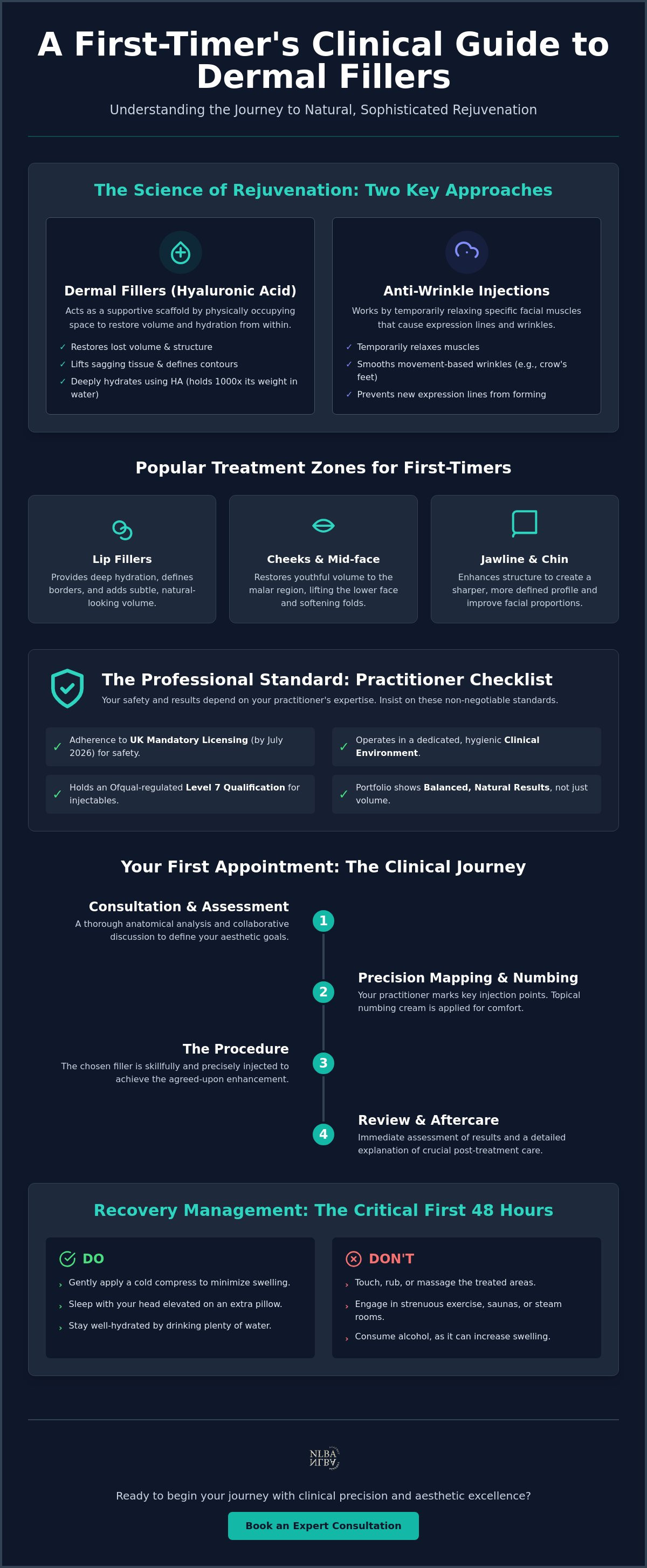
Modern aesthetics relies on the precise restoration of volume and contour. An Injectable filler is a gel-like substance designed to mimic the body's natural structural components. Most contemporary formulations utilize Hyaluronic Acid (HA), a carbohydrate molecule found naturally in human skin and connective tissues. Its primary function is maintaining hydration; HA can hold up to 1,000 times its weight in water, creating a plump, youthful appearance from within.
When you're getting fillers for the first time what to expect involves understanding the mechanism of action. Unlike anti-wrinkle injections, which temporarily relax muscles to smooth expression lines, dermal fillers physically occupy space. They act as a supportive scaffold to lift sagging tissue and define facial features. This distinction is vital: fillers provide volume and structure, while anti-wrinkle treatments address movement-based wrinkles.
To visualize the clinical application of these treatments, watch this expert overview:
Popular Treatment Zones for First-Timers
Lip Fillers: Precision techniques like the "Russian Lip" create vertical height and defined borders. Alternatively, subtle HA placement provides deep hydration for a "no-filler" look.
Cheek and Mid-face: Strategic volume restoration in the malar region. This lifts the lower face and softens nasolabial folds.
Jawline and Chin: Structural enhancement to create a sharper, more defined profile. Chin filler balances the side profile and improves facial proportions.
HA vs. BioFiller: Choosing Your Formula
Standard HA fillers remain the industry benchmark due to their predictability and reversibility. These products offer immediate results that typically last between six and 18 months, depending on the specific area and your metabolic rate. If the result requires adjustment, HA formulations can be dissolved using a specialized enzyme. This safety net makes HA the preferred choice for those new to injectables.
BioFiller represents an advanced, autologous alternative. This treatment involves processing your own plasma to create a natural injectable gel. It's often preferred by those seeking a regenerative approach without synthetic additives. While getting fillers for the first time what to expect varies by product, both HA and BioFiller aim for the same outcome: a refreshed, sophisticated version of your natural anatomy.
The Professional Standard: Choosing a London Practitioner
Selection of an aesthetic practitioner in London is no longer a matter of convenience; it's a decision rooted in clinical safety and anatomical expertise. By July 2026, the UK's mandatory licensing scheme for non-surgical cosmetic procedures becomes the baseline for professional practice. This legal framework, enabled by the Health and Care Act 2022, ensures that practitioners operate within strict hygiene and safety parameters. Choosing an expert who operates within a dedicated clinical environment, rather than a standard beauty salon, is essential for mitigating risks and achieving sophisticated results.
The Academy-led approach at Nadirah London establishes a superior technical standard. When a practitioner is also an educator, their understanding of facial mapping and injection depth is unparalleled. This dual identity ensures every treatment is performed with the precision required for high-impact, natural-looking transformations. Evaluating a portfolio should go beyond "before and after" shots; look for facial balancing, restored symmetry, and a clear preservation of the client's unique character. Our Aesthetic Training Courses ensure our team maintains this elite level of proficiency.
Essential Credentials and Accreditations
Verifying a practitioner's background is the first step in your aesthetic journey. In 2026, look for evidence of Ofqual-regulated qualifications, specifically Level 7 for injectables. This level of training signifies a deep understanding of facial anatomy and complication management. Professional indemnity insurance and adherence to local authority licensing are non-negotiable requirements for any reputable clinic. Reviewing FDA information on dermal fillers provides additional context on the approved uses and safety profiles of the HA formulas used in modern practice. A professional standard involves:
Mandatory local authority practitioner and premises licenses.
Proof of advanced aesthetic training and continuous professional development.
Clinical protocols for sterile preparation and aftercare support.
Clear categorization of procedures into amber or red risk levels.
The Consultation: Your Aesthetic Blueprint
A bespoke treatment plan is the foundation of a successful outcome. When getting fillers for the first time what to expect during your initial consultation is a rigorous assessment of your medical history and bone structure. This isn't a retail transaction; it's a medical consultation. Your practitioner should discuss your specific aesthetic goals while managing expectations regarding volume and longevity. They'll create a blueprint that prioritizes subtle rejuvenation over radical change. This session is your opportunity to ask about the specific HA products being used and the expected recovery timeline. A high-end consultation ensures you move forward with total confidence in the planned transformation.
Your First Appointment: The Clinical Step-by-Step
The clinical process is a choreographed sequence of technical steps designed for safety and aesthetic precision. Understanding getting fillers for the first time what to expect involves deconstructing the appointment into distinct, professional phases. While the entire session lasts approximately 30 to 45 minutes, the actual injection time is surprisingly brief. Dermal filler cosmetic procedures are minimally invasive, yet they require a high level of anatomical expertise to execute correctly.
Step 1: Facial Mapping and Marking. Clinical identification of injection points. Use of surgical pencils to mark the skin. Assessment of light reflection and facial symmetry. This blueprint ensures the filler integrates perfectly with your unique bone structure.
Step 2: Topical Anesthesia. Application of high-grade numbing cream. A 15 to 20-minute waiting period for maximum efficacy. This significantly reduces the sensation of the initial needle entry.
Step 3: Clinical Administration. Controlled delivery of the HA gel. Use of ultra-fine needles or blunt-tipped cannulas. Continuous assessment of facial movement and tissue response during the process.
Step 4: Post-Treatment Assessment. Immediate visual review of the results. Cleansing of the injection sites. Application of cooling packs to minimize initial swelling.
Pain Management and Comfort
Expect a brief "pinch" followed by a feeling of pressure as the gel integrates into the tissue. Modern fillers are lidocaine-infused, providing an internal numbing effect that increases comfort as the procedure progresses. Focus on steady, deep breathing. A professional practitioner will pace the treatment to your comfort level, ensuring the experience remains a positive step in your self-care journey. The reality is far less intense than most first-timers anticipate.
The Science of the Cannula vs. Needle
Tool selection is based on your specific anatomy and the desired outcome. Needles are utilized for sharp, localized definition. They're essential for detailed work like the Cupid’s bow or precise jawline angles. Cannulas are blunt, flexible tubes that navigate deeper tissue layers with minimal trauma. They're the preferred choice for larger areas like the cheeks or mid-face, as they significantly reduce the risk of bruising and swelling. Your practitioner will select the optimal instrument for each zone to ensure a sophisticated, bruise-free result.
The Recovery Phase: What Happens After the Needle?
Recovery is a structured biological timeline. When getting fillers for the first time what to expect is a period of tissue integration rather than instant perfection. The inflammatory response is a necessary part of the process, as the Hyaluronic Acid (HA) gel begins to settle within your unique anatomical layers. Patience is a clinical requirement for achieving a sophisticated result.
The First 48 Hours: Peak swelling and localized tenderness. This is a standard reaction to the micro-trauma of the injection.
Days 3 to 5: The "settling" period. Initial puffiness subsides. The product begins to integrate with your natural tissue.
Day 14: The final reveal. The HA has fully hydrated and settled. This is the definitive point of assessment for your aesthetic transformation.
Distinguishing between normal side effects and rare complications is essential for first-time clients. Most bruising is superficial and resolves within a week. However, extreme pain, skin blanching (whitening), or localized heat at the injection site requires immediate clinical attention. Professional clinics provide clear emergency protocols to ensure your safety throughout this integration phase.
Essential Aftercare Protocol
Maintaining the integrity of the treatment requires strict adherence to post-procedure guidelines. Avoid high-temperature environments like saunas, steam rooms, or direct sun exposure for at least 72 hours. Heat dilates blood vessels, which can exacerbate swelling and prolong the recovery period. Physical activity should be restricted; skip the gym for 24 to 48 hours to keep your blood pressure stable and minimize bruising.
Sleep hygiene is equally important. Sleep on your back with an extra pillow for the first two nights. This elevation reduces fluid retention in the face and prevents accidental pressure on the treated areas, ensuring the filler remains exactly where it was precisely placed.
Managing Swelling and Bruising
Cold Compresses: Apply cold packs for 10 minutes every hour during the first day. This constricts blood vessels and manages discomfort.
Arnica Support: Use topical arnica or oral supplements to accelerate the resolution of any minor bruising.
Deep Hydration: Increase your water intake. Since HA is hydrophilic, maintaining high hydration levels supports the plumping effect and overall skin quality.
If you're ready to experience a precision-led transformation with London's elite practitioners, view our available options for Dermal Fillers and begin your journey today.
A follow-up assessment at the 14-day mark is the professional standard. This allows your practitioner to review the symmetry and volume once all swelling has vanished. It's the final step in ensuring your results meet the aspirational standards of modern aesthetic medicine.
Maintaining Your Results: The Long-Term Aesthetic Path
Aesthetic longevity is a deliberate strategy. Once you've mastered getting fillers for the first time what to expect, the focus shifts from initial transformation to sophisticated preservation. Maintenance isn't about radical change; it's about sustaining the structural support and hydration levels achieved during your primary session. Most high-end Hyaluronic Acid (HA) formulations provide results for six to 18 months, but the most successful outcomes involve proactive "top-up" appointments before the product fully metabolizes.
Even if you are not based in a major hub like London, you can explore Non-surgical aesthetic treatments and skin rejuvenation options at specialized clinics like Aesthetics Loft that adhere to these elite clinical standards and prioritize natural-looking results.
The most effective results often come from a multi-modality approach. Strategic layering of Dermal Fillers with Anti-Wrinkle Injections allows for a comprehensive rejuvenation that addresses both volume loss and dynamic expression lines. This cumulative effect creates a refreshed appearance that looks better with age, as the skin's scaffold is consistently supported by professional intervention.
The "Less is More" Maintenance Philosophy
Precision aesthetics prioritizes facial mobility. We recommend smaller, frequent increments rather than large, infrequent doses. This avoids the "overfilled" look and ensures your features remain balanced as your natural anatomy evolves. Consistency is a hallmark of luxury care. Staying with the same practitioner allows for a detailed historical record of your treatment blueprint, ensuring every subsequent injection respects your previous facial mapping.
Strategic Top-ups: Scheduling sessions every nine to 12 months to maintain peak volume.
Expression Preservation: Micro-dosing techniques that allow for natural facial movement.
Practitioner Continuity: Building a long-term relationship with an expert who understands your aesthetic trajectory.
Tissue Integration: Allowing the HA to settle and hydrate fully before adding further volume.
Beyond Facial Fillers: Advanced Aesthetic Goals
As your confidence grows, your aesthetic goals might expand beyond facial rejuvenation. Getting fillers for the first time what to expect often acts as a gateway to more advanced body contouring solutions. Liquid BBL offers a non-surgical alternative for gluteal enhancement, utilizing high-volume filler techniques to improve silhouette and projection without the downtime of surgery.
True transformation also involves internal support. IV Vitamin Drips deliver essential micronutrients directly into the bloodstream, supporting the skin's regenerative capacity and enhancing the results of your topical and injectable treatments. For those who find themselves inspired by the technical craft of physical enhancement, our Aesthetic Training Courses provide a professional pathway to transition from client to practitioner. This comprehensive ecosystem ensures that your journey with modern aesthetics is as expansive as your aspirations.
Elevating Your Aesthetic Journey
Precision-led transformation is built on anatomical expertise, rigorous clinical standards, and a sophisticated maintenance plan. From the initial Hyaluronic Acid integration to the final 14-day reveal, the process is designed for predictable, natural results. Navigating the technical landscape of getting fillers for the first time what to expect becomes a seamless, luxury experience when guided by academy-level specialists. You've learned the importance of practitioner credentials and the biological timeline of tissue integration.
Nadirah London offers a premium clinic environment where clinical precision meets aesthetic excellence. As an Accredited Aesthetic Training Academy, we maintain the highest technical standards in the industry. Whether you're seeking our specialized Russian Lips technique or advanced body contouring like Liquid BBL, our experts deliver results that align with your aspirational goals. We prioritize facial harmony and long-term skin health above all else.
Ready to begin your transformation? Book your bespoke filler consultation at Nadirah London today. Take the first step toward a more confident, rejuvenated version of yourself with the city's leading aesthetic experts.
Frequently Asked Questions
How long do dermal fillers typically last for a first-timer?
Dermal fillers typically last between six and 18 months for most individuals. The exact duration depends on the specific product formulation, your personal metabolic rate, and the treatment zone. Lips generally require top-ups sooner due to high muscle activity, whereas cheek or jawline enhancements often maintain their structural integrity for over a year.
Does getting fillers for the first time hurt?
Discomfort is minimal during the procedure. When getting fillers for the first time what to expect is a brief pinching sensation followed by a feeling of internal pressure. Most modern formulations include lidocaine for immediate numbing. We also apply a high-grade topical anesthetic 20 minutes before the first injection to ensure a comfortable, luxury experience.
Can I go back to work immediately after my filler appointment?
Returning to work immediately is possible for most clients. Social downtime is negligible, though minor localized swelling or redness may be visible for the first 48 hours. We recommend avoiding high-impact exercise and extreme heat, such as saunas or steam rooms, for at least two days post-treatment to support optimal settling.
Will people be able to tell I’ve had "work done"?
Results are designed to be subtle and sophisticated. Precision mapping ensures that fillers integrate with your natural anatomy rather than masking it. The objective is facial balancing and restored volume, not a radical change. Friends often notice you look refreshed without identifying the specific clinical intervention.
What is the difference between dermal fillers and Botox?
Dermal fillers restore lost volume and define structure using a gel-like substance. Anti-wrinkle injections work by temporarily relaxing the muscles responsible for expression lines. Fillers address static wrinkles and hollows, while muscle relaxants target dynamic lines like crow's feet or forehead creases. Both treatments are often combined for a comprehensive rejuvenation.
What should I avoid doing before my first filler appointment?
Avoid alcohol and blood-thinning supplements for at least 48 hours before your session. Substances like aspirin, ibuprofen, fish oil, and vitamin E can increase the risk of bruising at the injection site. Arriving with a clean, makeup-free face is also recommended to ensure a sterile clinical environment for your facial mapping.
Are dermal fillers reversible if I don’t like the results?
Hyaluronic Acid fillers are fully reversible using a specialized enzyme called hyaluronidase. If adjustments are required, this enzyme can dissolve the gel almost immediately. This provides a significant safety net for those getting fillers for the first time what to expect. Note that BioFiller, which uses your own plasma, follows a different biological integration path.
How much filler (in ml) do I need for a natural look?
Achieving a natural result usually requires 0.5ml to 1ml of product per treatment area. First-timers benefit from a conservative approach, allowing the tissue to adapt to the new volume. Precise requirements are determined during your clinical consultation, prioritizing facial harmony over excessive augmentation to maintain your authentic character.


Comments