

Dermal Filler Aftercare Instructions: The Expert Guide to Flawless Results (2026)

Your aesthetic journey doesn't end when you leave the clinic chair; it begins the moment the needle is withdrawn. You've invested in a premium transformation. It's natural to feel anxious about "ruining" your symmetry or waking up with noticeable bruising. With the July 2026 UK legislation now mandating practitioner registration and strict licensing, following professional dermal filler aftercare instructions is a clinical necessity. It's the final step in securing a high-end, sophisticated result.
We recognize the fear of "duck lips" and the frustration of conflicting online advice. This guide delivers a professional roadmap to minimize downtime and ensure your volume settles with absolute precision. You'll gain clarity on the critical 48-hour protocols, from sleep positioning to heat avoidance. We'll outline exactly when to wait for swelling to subside and when to contact your practitioner. Expect a clear, scannable breakdown of the essential steps required to protect your aesthetic investment and achieve flawless, natural-looking symmetry.
Key Takeaways
Strict "hands-off" protocol and infection prevention during the critical six-hour post-treatment window.
Comprehensive dermal filler aftercare instructions for thermal regulation and vasodilator avoidance to minimize social downtime.
Anatomical-specific recovery techniques for lip-filler precision and mid-face volume protection.
Strategic UV protection and metabolic lifestyle management to maximize hyaluronic acid longevity.
Clinical differentiation between standard oedema and high-risk vascular indicators like skin blanching.
Table of Contents
Immediate Post-Treatment: The Critical 6-Hour Window
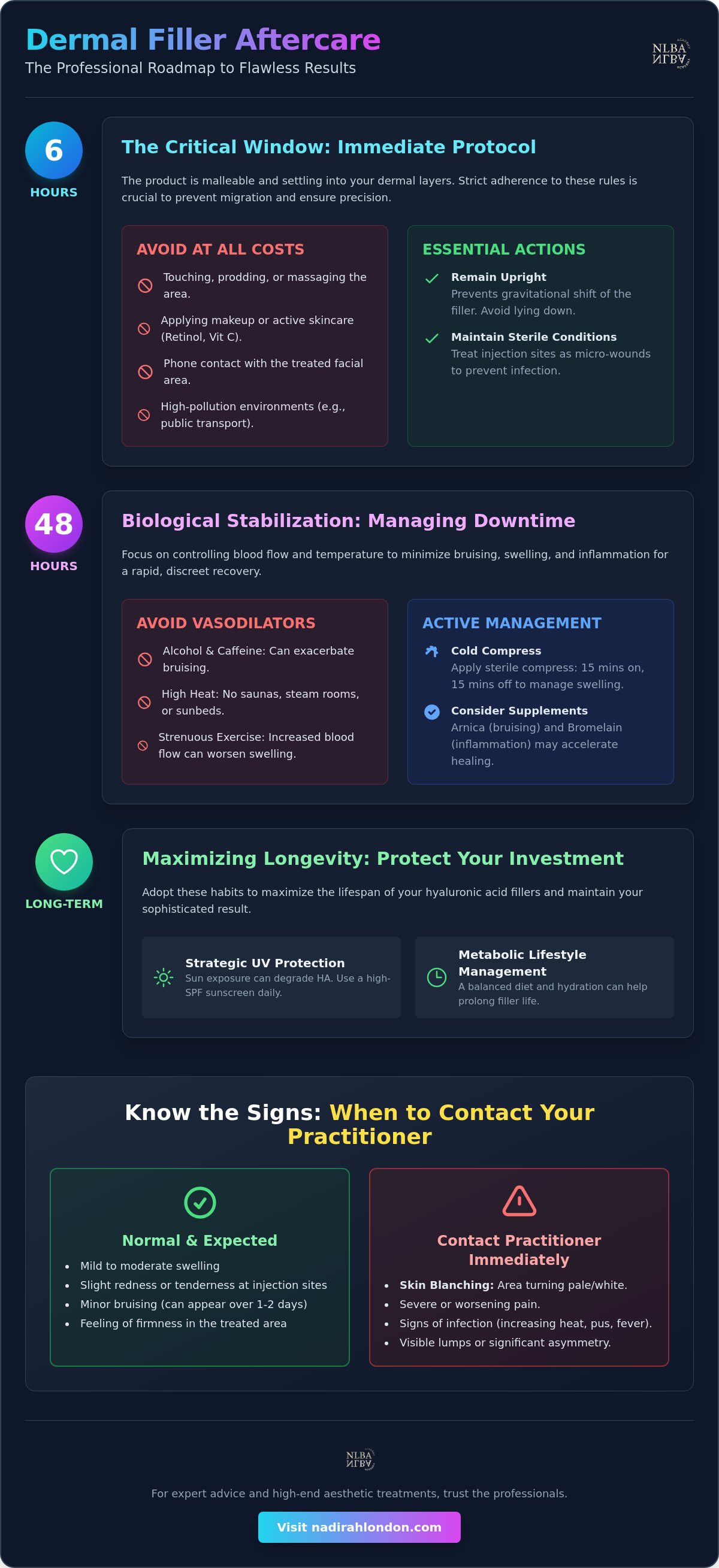
The first six hours post-injection define the success of your aesthetic transformation. During this phase, the product remains malleable and hasn't yet integrated with your dermal layers. Precision is paramount. You've invested in a high-end result; protecting that investment requires strict adherence to clinical protocols. What are dermal fillers? At their core, they're sophisticated gel formulations designed to mimic natural volume, but they require a "setting" period to become permanent fixtures in your facial architecture.
To better understand the clinical necessity of these protocols, watch this detailed guide:
The "Hands-Off" rule is the most vital component of your dermal filler aftercare instructions. Manual pressure during this window is the primary cause of filler migration. Even slight prodding can shift the product from its intended anatomical position, leading to asymmetry or unwanted "fullness" in adjacent areas. Treat the injection sites as open micro-wounds. Your skin's barrier is temporarily compromised, making it highly susceptible to bacterial ingress. Maintaining sterile conditions isn't optional; it's a requirement for a complication-free recovery.
The Science of Product Settling
Tissue Integration: Hyaluronic acid molecules must bond with facial fascia to create a natural "anchor" point.
Migration Prevention: Avoiding "moulding" by restricting heavy facial expressions or resting your face on your hands.
Gravity Management: Remaining upright for the full 6-hour duration ensures the product settles without being influenced by horizontal pressure.
Immediate Environmental Hazards
Your immediate environment poses several risks to your fresh results. Avoid makeup and skincare actives like Retinol or Vitamin C, which can irritate the injection sites. Mobile phones are notorious vectors for bacteria; keep them away from your face during calls. For London-based clients, be mindful of high-pollution areas. Particulates found in the Tube or busy city centres can settle into the micro-channels created by the needle. Stick to a gentle, fragrance-free cleansing routine if necessary, using only light, dabbing motions to avoid disrupting the underlying product.
The 48-Hour Recovery Protocol: Managing Social Downtime
After the initial six-hour window, the focus shifts to biological stabilisation. The 48-hour recovery protocol is designed to prevent inflammatory spikes and ensure the gel settles with clinical precision. You've followed the immediate dermal filler aftercare instructions; now you must manage your systemic environment to protect your results. This phase is about controlling blood flow and temperature to facilitate a seamless transition from treatment to transformation.
Thermal regulation is a non-negotiable requirement. Strictly prohibit saunas, steam rooms, and sunbeds for at least 48 hours. High temperatures induce vasodilation, a process where blood vessels expand. This significantly increases the risk of oedema and prolongs your recovery. Dermal fillers are sensitive to extreme heat during the initial integration phase. Keeping your core temperature stable is the most effective way to ensure a rapid, discreet recovery.
Alcohol and caffeine are potent vasodilators that can compromise your aesthetic investment. Consuming alcohol within 48 hours of treatment is the fastest way to exacerbate bruising and trigger late-onset swelling. Caffeine has similar stimulant effects that can increase heart rate and blood pressure. Stick to herbal infusions or pure water to keep your system calm. If you're planning a high-end aesthetic journey, choosing a clinic that prioritises these dermal fillers protocols is essential for success.
Minimising Bruising and Swelling
Cold Compress Protocol: Apply a sterile cold compress for 15 minutes on and 15 minutes off. This manages haematoma risk and provides immediate comfort without placing excessive pressure on the product.
Natural Supplements: Arnica and Bromelain are industry standards for accelerated healing. Arnica helps reduce visible bruising, while Bromelain, an enzyme found in pineapples, targets deep-tissue inflammation.
Hydration Strategy: Hyaluronic acid is hydrophilic, meaning it draws in water to create volume. Consistent hydration ensures your filler performs as intended and integrates smoothly with your natural tissue.
Dietary and Medication Constraints
Your medicine cabinet and diet play a major role in your recovery speed. Avoid blood-thinning medications like Aspirin and Ibuprofen, as these NSAIDs lead to prolonged bruising. Refer to the FDA-approved uses of dermal fillers for comprehensive safety guidelines regarding medications and contraindications. For pain management, Paracetamol is the safe alternative. Additionally, monitor your sodium intake. High-salt meals cause significant water retention, which leads to excessive morning swelling, particularly in delicate areas like the lips or under-eyes. Sleep with your head elevated on two pillows to encourage lymphatic drainage and prevent fluid from pooling in the treated areas.
Area-Specific Aftercare: From Russian Lips to Liquid BBL
Precision in dermal filler aftercare instructions requires an understanding of anatomical specificity. Different facial and body regions possess unique vascular structures and movement patterns. While general recovery rules apply, the protocol for a delicate vermilion border differs significantly from a high-volume gluteal enhancement. Understanding the nuances of dermal filler recovery ensures your results remain symmetrical, defined, and anchored in their intended position.
Optimising Lip Filler Results
The Russian Lip Technique: Maintaining vertical height without excessive projection requires a strict "no-pressure" policy. Avoid drinking through straws or puckering for 24 hours to prevent the gel from migrating into the perioral area, often called the "moustaching" effect.
Lump Management: Minor swelling can feel like small nodules. Don't massage these immediately. Allow 14 days for the product to integrate with your tissue before assessing symmetry.
Barrier Protection: Keep the vermilion border hydrated with fragrance-free balms. This prevents crusting and protects the injection sites as they heal.
Liquid BBL Recovery: The Nadirah London Expert View
Liquid BBL (Body Filler) is a specialized procedure that demands a unique recovery strategy. Unlike surgical alternatives, there's no fat transfer, but the volume of hyaluronic acid or biostimulatory filler requires careful management. Pressure is the primary enemy of body fillers. We recommend using specialized cushions when sitting to ensure the product isn't compressed against hard surfaces. This preserves the rounded, aspirational contour achieved during your session.
Compression garments play a vital role in Liquid BBL aftercare, providing the necessary support to "set" the filler while managing tissue expansion. Unlike surgical BBL garments, these are designed for comfort and light stabilization rather than aggressive moulding. You should avoid lower-body gym sessions, particularly squats or heavy lunges, for at least 14 days. This prevents the gluteal muscles from displacing the product before it has fully integrated with the deep dermal layers.
Mid-Face, Jawline, and Chin Definition
High-G-prime fillers used for cheek contouring and jawline definition are robust but susceptible to displacement in the first 72 hours. Avoid heavy eyewear or oversized sunglasses that rest on the malar area, as the weight can create indentations in the fresh filler. For jawline and chin enhancements, sleep exclusively on your back. Side-sleeping applies unilateral pressure that can compromise the sharp, lateral definition of the mandible. Additionally, men should avoid aggressive shaving for 48 hours to prevent unnecessary manipulation of the chin and jawline area.
Maximising Longevity: Protecting Your Aesthetic Investment
Longevity is a strategic outcome. While the initial 48 hours focus on stabilization, long-term dermal filler aftercare instructions prioritize slowing the body's natural metabolic degradation of the product. Your lifestyle choices directly dictate whether your results last six months or eighteen. Protecting your aesthetic investment requires a shift from immediate recovery to a proactive maintenance mindset.
The metabolism factor is a critical variable. High-intensity cardio and frequent heat exposure accelerate the breakdown of hyaluronic acid. For those with a high metabolic rate, the body processes the gel more rapidly. UV protection is equally vital. Ultraviolet radiation is the primary environmental enemy of filler longevity. Sun exposure triggers the production of hyaluronidase, the enzyme that dissolves the filler. Daily application of broad-spectrum SPF 50 is a non-negotiable maintenance step for any high-end transformation.
Lifestyle Habits for Longer-Lasting Results
Strategic Hydration: Hyaluronic acid is hydrophilic. Maintaining high systemic hydration levels keeps the molecules plump and the volume looking fresh.
Supportive Skincare: Incorporating medical-grade Retinoids and Vitamin C preserves the collagen scaffold around the filler, preventing premature sagging.
Activity Management: Balancing high-impact HIIT with low-impact recovery sessions can extend the life of your facial contouring.
Synergistic Treatments at Nadirah London
Combining injectables with advanced skin therapies creates a holistic rejuvenation effect. Advanced facials, such as Dermaplaning or HydroFacials, should be scheduled at least 14 days after your filler session. These treatments refine the skin's surface, ensuring the underlying volume looks natural and luminous. IV Vitamin Drips provide the essential micronutrients required for optimal skin health and cellular recovery speed. For those seeking a biostimulatory boost, integrating PRP/PRF and BioFiller can enhance the structural integrity of the skin, providing a more durable aesthetic result.
Maintenance is more efficient than total restoration. Scheduling "top-up" appointments before the product has completely dissipated allows for a "layering" effect. This technique builds a foundation of volume that requires less product over time to maintain. Waiting until the filler is entirely gone often results in a more dramatic, less natural transition. Protect your investment by booking your maintenance dermal filler session at the first sign of volume loss to ensure seamless, aspirational results.
Identifying Complications: When to Contact Your Practitioner
Clinical vigilance is the final pillar of your aesthetic journey. While most recoveries follow a standard trajectory, distinguishing between normal post-injection reactions and genuine medical complications is vital for your safety. Following your dermal filler aftercare instructions significantly reduces risk, but an authoritative understanding of "red flags" ensures you can act decisively if required. In the landscape of the July 2026 UK aesthetics legislation, choosing an accredited practitioner is only the first step; being an informed client is the second.
Standard swelling, or oedema, typically peaks 48 hours after treatment and gradually subsides. This is a natural inflammatory response to the micro-trauma of the needle. However, vascular compromise is a different clinical reality. This occurs if the filler accidentally enters or compresses a blood vessel. The primary warning sign is "blanching," where the skin looks unusually pale, white, or dusky blue compared to the surrounding tissue. If you notice these colour changes or experience pain that feels disproportionate and throbbing, contact your practitioner immediately.
The Red Flag Checklist
Persistent Throbbing: Pain that intensifies over time and doesn't respond to standard Paracetamol.
Skin Mottling: A lace-like, purple or grey pattern appearing on the skin surface near the injection site.
Temperature Changes: Skin that feels significantly cooler to the touch than the rest of your face.
Visual Disturbances: Any changes in vision or severe, sudden headaches following facial injections require emergency assessment.
Professional Resolution and Dissolving
Delayed onset nodules can sometimes appear weeks or even months after your initial appointment. These lumps aren't always a result of poor technique; they can be late-stage inflammatory responses or the body's reaction to a viral illness. At Nadirah London, we don't ignore these developments. Our Academy-trained experts use clinical-grade Hyaluronidase to manage these issues. This enzyme acts as a clinical reset button, dissolving hyaluronic acid fillers safely and effectively to restore your natural anatomy.
Post-treatment safety is a core component of our clinical governance. We offer a comprehensive support guarantee, ensuring you have direct access to professional advice throughout your recovery. Whether you require a minor aesthetic correction or an emergency dissolution, our team is trained in the latest safety protocols. Choosing our dermal fillers services means you're backed by a clinic that prioritises vascular safety and long-term tissue health above all else. Seeking help early isn't a sign of failure; it's a strategic move to protect your health and your aesthetic investment.
Securing Your Aesthetic Transformation
Mastering the clinical protocols of dermal filler aftercare instructions is the final step in achieving a flawless, high-end result. By respecting the initial six-hour "hands-off" window and managing thermal exposure during the critical 48-hour recovery phase, you ensure your filler settles with absolute precision. Whether you've opted for the vertical height of Russian Lips or the aspirational contours of a Liquid BBL, anatomical specificity remains the key to maintaining symmetry and preventing migration.
Long-term success depends on a proactive maintenance strategy. Protecting your hyaluronic acid investment from UV degradation and metabolic spikes preserves the structural integrity of your transformation. As a London-based clinical leader and an Accredited Aesthetic Training Academy, we combine technical mastery with a luxury experience. Our specialists in Russian Lips and Liquid BBL provide the expert oversight necessary for safe, sophisticated, and symmetrical outcomes. Your journey to an elevated aesthetic deserves the highest standard of professional care; for instance, those in the Southeast Asia region can learn more about Dr. Sankeerth Reddy's Clinic to see how global leaders implement these rigorous safety standards.
Book your bespoke consultation at Nadirah London Beauty Clinic to experience clinical expertise that prioritises your safety and delivers aspirational results. We look forward to guiding you through every stage of your aesthetic evolution.
Frequently Asked Questions
Can I fly immediately after getting dermal fillers?
You should wait at least 24 to 48 hours before boarding a flight. The pressure changes in an aircraft cabin can exacerbate swelling and increase the risk of bruising. For long-haul travel, we recommend waiting one week to ensure you remain near your practitioner during the initial integration phase.
How long does it take for fillers to fully settle and show final results?
It takes approximately 14 days for the product to fully integrate with your facial tissue. It's essential to follow your dermal filler aftercare instructions during this period to ensure symmetry. While you'll see immediate volume, the final, refined aesthetic only emerges once all residual oedema has completely subsided.
Is it safe to have a facial or massage after fillers?
Avoid facials, dermaplaning, or facial massages for at least 14 days post-treatment. Manual pressure can displace the filler before it has anchored in the deep dermal layers. Once the two-week settling period is complete, professional skin treatments can be safely used to enhance your overall results.
What should I do if I notice a small lump in my filler?
Minor lumps are common during the first 14 days as the gel integrates with your natural anatomy. Don't attempt to massage or "fix" these lumps yourself, as this can cause migration. If the lump persists beyond two weeks or is accompanied by pain, contact your practitioner for a professional review.
Can I drink alcohol the night after my filler treatment?
Refrain from consuming alcohol for at least 48 hours to ensure your dermal filler aftercare instructions deliver the best results. Alcohol acts as a potent vasodilator, which increases blood flow to the skin's surface. This significantly exacerbates bruising and can lead to prolonged, uncomfortable swelling in the treated areas.
When can I resume my normal skincare routine including Retinol?
You can resume a basic, gentle skincare routine 24 hours after your injections. However, you must wait at least five days before reintroducing active ingredients like Retinol, Vitamin C, or AHAs. These potent compounds can irritate the healing injection sites and trigger unnecessary inflammation during the recovery phase.
How do I sleep to avoid flattening my new cheek fillers?
Sleep exclusively on your back with your head elevated on two pillows for the first three nights. This prevents unilateral pressure on the malar area, which can cause the filler to shift or flatten before it has set. Avoid resting your face on your hands or using tight sleep masks during this window.
Are there any foods I should avoid after lip fillers?
Avoid very salty, spicy, or extremely hot foods for the first 48 hours. High sodium intake causes the body to retain water, which leads to excessive swelling in the delicate lip tissue. Hot temperatures can increase local blood flow, while spicy foods may irritate the micro-channels where the needle entered the skin.


Comments