

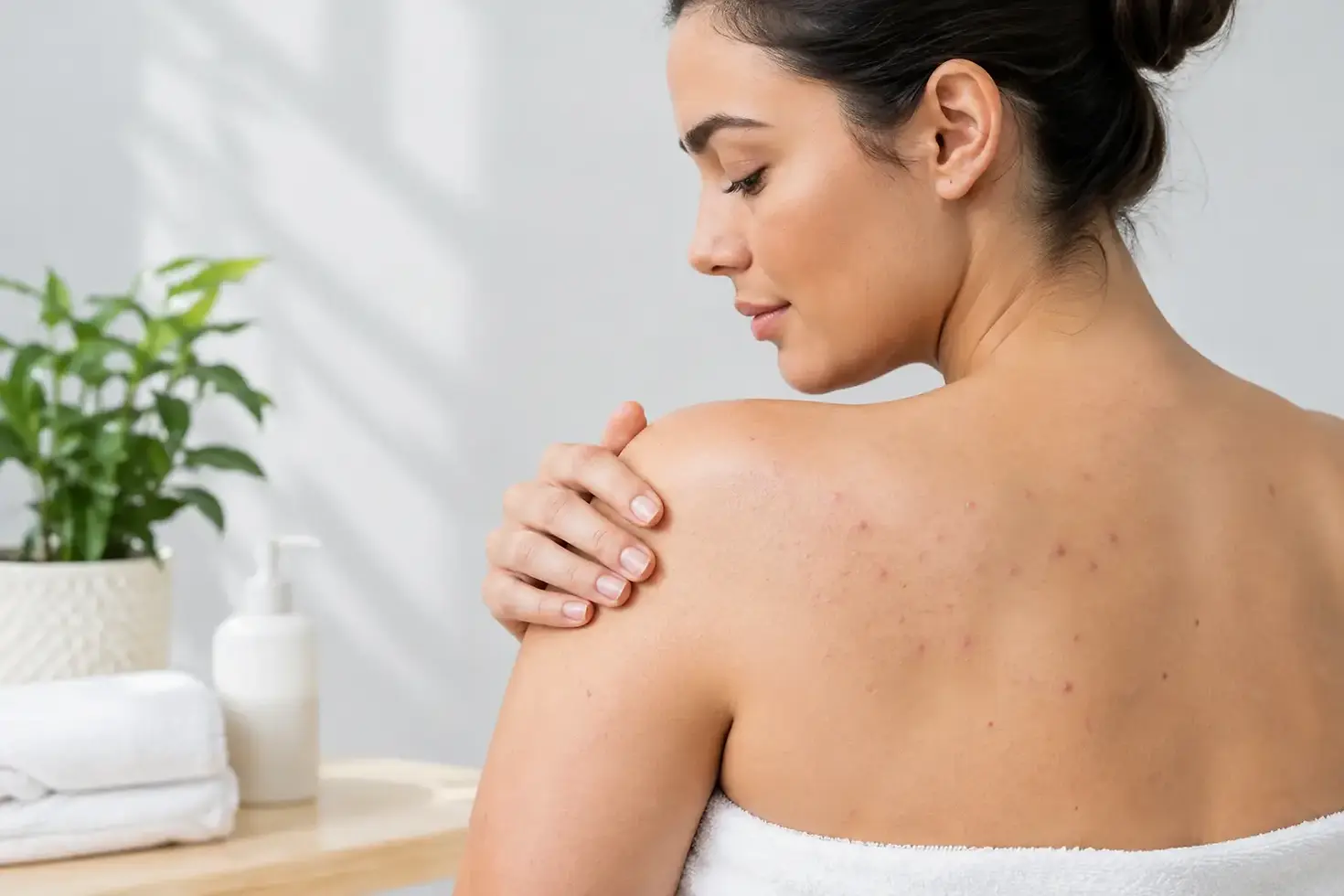
A Body Acne Guide for Clearer, Calmer Skin

Body acne can feel especially frustrating because it is difficult to see, difficult to reach and often made worse by ordinary routines such as exercising, getting dressed or applying fragranced body products. This body acne guide explains what may be behind persistent breakouts on the back, chest, shoulders or buttocks, and how to approach clearer skin without harsh guesswork.
Body breakouts are common at every age. They are not a sign of poor hygiene, and aggressively scrubbing the skin rarely solves the problem. The most effective approach is usually a consistent routine, thoughtful product choices and professional support where breakouts are persistent, inflamed or affecting confidence.
Why body acne happens
Acne develops when pores become blocked with excess oil, dead skin cells and debris. Bacteria associated with acne can then contribute to inflammation, resulting in whiteheads, blackheads, tender spots or deeper blemishes. The body has many oil-producing glands, particularly across the upper back, chest and shoulders, which is why these areas can be prone to breakouts.
Hormonal changes can play a part, including around menstrual cycles, pregnancy, coming off contraception or periods of increased stress. Genetics also matter. Some people are simply more likely to produce oil or experience congestion, even with an excellent skincare routine.
There are also external triggers to consider. Tight activewear, sports bras, backpacks and synthetic fabrics can trap heat, sweat and friction against the skin. Leaving sweaty clothing on after a workout may prolong this exposure. Heavy body oils, rich lotions, hair conditioners rinsed over the back, and fragranced products can also contribute to congestion for some skin types.
Not every bump is acne. Folliculitis, which is inflammation around the hair follicles, can look similar and may be triggered by sweat, friction, shaving or yeast. Keratosis pilaris tends to feel like fine, rough bumps, often on the upper arms or thighs. An accurate assessment matters because treating the wrong concern with strong exfoliants can leave skin more irritated.
A body acne guide to a practical routine
The goal is not to strip the skin. Over-cleansing and abrasive exfoliation can compromise the skin barrier, causing dryness, sensitivity and, in some cases, more visible inflammation. Instead, choose a simple routine you can maintain for several weeks.
Shower after exercise where possible, particularly if you have been sweating in fitted clothing. Use a gentle body cleanser daily, then introduce an acne-focused wash a few times per week if your skin tolerates it. Salicylic acid can help clear oil and dead skin cells from pores, while benzoyl peroxide may be useful for inflamed acne-prone areas. Both can be drying, so start gradually rather than using multiple strong products at once.
Benzoyl peroxide can bleach towels, bedding and clothing. Rinse it thoroughly and use white towels if needed. If you are using an active wash, allow it to sit on the skin briefly before rinsing, but follow the product instructions rather than leaving it on for excessive periods.
Moisturiser still has a place in an acne routine. Choose a lightweight, non-comedogenic body lotion without heavy fragrance if your skin feels dry or tight. Dehydrated skin is not the same as dry skin, and discomfort after cleansing is a sign that your routine may be too strong.
For breakouts across the shoulders and back, rinse conditioner out first and then wash the body afterwards. This small change helps prevent residue from sitting on acne-prone skin. Wash gym clothing, pyjamas and bedding regularly, and avoid repeatedly picking at blemishes. Picking increases the chance of marks, scarring and prolonged healing.
Be careful with exfoliation
Exfoliation can be beneficial, but more is not better. Avoid grainy scrubs, stiff brushes and rough exfoliating gloves over active spots. They create friction and may spread irritation across already inflamed skin.
If you use a chemical exfoliant, do not layer it immediately with several other active ingredients. Alternate treatments and give your skin time to respond. It can take six to eight weeks of steady, appropriate care to judge whether a routine is helping, provided you are not experiencing burning, persistent redness or peeling.
Lifestyle factors worth reviewing
Food is rarely the sole cause of body acne, and restrictive diets are not an appropriate first response. However, some people notice a pattern with high-glycaemic foods, skimmed milk or whey protein supplements. If you suspect a connection, make one considered change at a time and observe it for several weeks rather than eliminating whole food groups without guidance.
Stress, poor sleep and hormonal fluctuations may also influence acne. They cannot always be controlled, but recognising the pattern can make breakouts feel less unpredictable. Keeping a brief note of flare-ups, products, exercise habits and cycle changes can be useful during a professional consultation.
Clothing choices matter more than many people expect. Breathable fabrics and changing promptly after sweating can reduce friction and occlusion. This does not mean you must stop exercising or avoid fitted clothing entirely. It means giving the skin a clean, dry reset afterwards.
When professional support is the right next step
Book a medical appointment if acne is painful, widespread, leaving scars or not improving after a consistent over-the-counter routine. Deep nodules, cyst-like lesions, sudden severe acne, or breakouts alongside other hormonal symptoms deserve clinical assessment. A GP, pharmacist or dermatologist can advise on prescription options where appropriate.
Professional aesthetic treatment can also be considered for suitable clients with persistent congestion, uneven texture or post-breakout marks. At Nadirah London Clinic, the approach begins with a detailed consultation, because the same treatment is not appropriate for every form of body breakout. Current inflammation, sensitivity, medication, pregnancy status, previous treatments and your skin goals should all inform the plan.
An algae body peel may be an option for selected concerns. Professional exfoliating treatments can support skin renewal and help improve the appearance of congested, dull or uneven body skin, but they are not a substitute for diagnosing severe acne or an active skin infection. Safe treatment means respecting contraindications, preparing the skin properly and giving clear aftercare rather than promising instant perfection.
Following a peel or any exfoliating body treatment, avoid heat, intense exercise, fragranced products and additional acids for the advised period. Protect exposed areas from sun exposure and do not pick at any temporary flaking. Your practitioner should explain what is normal, what to avoid and when to get in touch.
Preventing marks and protecting confidence
Post-inflammatory marks can remain after a spot has healed, especially on deeper skin tones. They may appear brown, purple, red or grey, and they are not always scars. The distinction is useful because marks often fade gradually with time and appropriate skincare, whereas indented or raised scars may need more specialised management.
The most reliable way to limit marks is to reduce inflammation early and avoid squeezing. Use sun protection on areas exposed in warmer weather or on holiday, as ultraviolet exposure can deepen discolouration and make marks last longer. Patience is part of the process: skin often improves in stages, first with fewer new breakouts, then with calmer texture and finally with gradual fading of leftover marks.
Clearer body skin is rarely the result of one dramatic product. It comes from noticing triggers, using active ingredients carefully and seeking qualified advice before concerns become painful or scarring. A considered plan gives your skin the best chance to settle, while allowing you to feel comfortable in the clothes, activities and moments you should not have to avoid.


Comments